Collection 01
ASK. SEEK. KNOCK.
“Ask, and it will be given to you; seek, and you will find; knock, and it will be opened to you. For everyone who asks receives, and he who seeks finds, and to him who knocks it will be opened.”
BIBLICAL INSIGHT
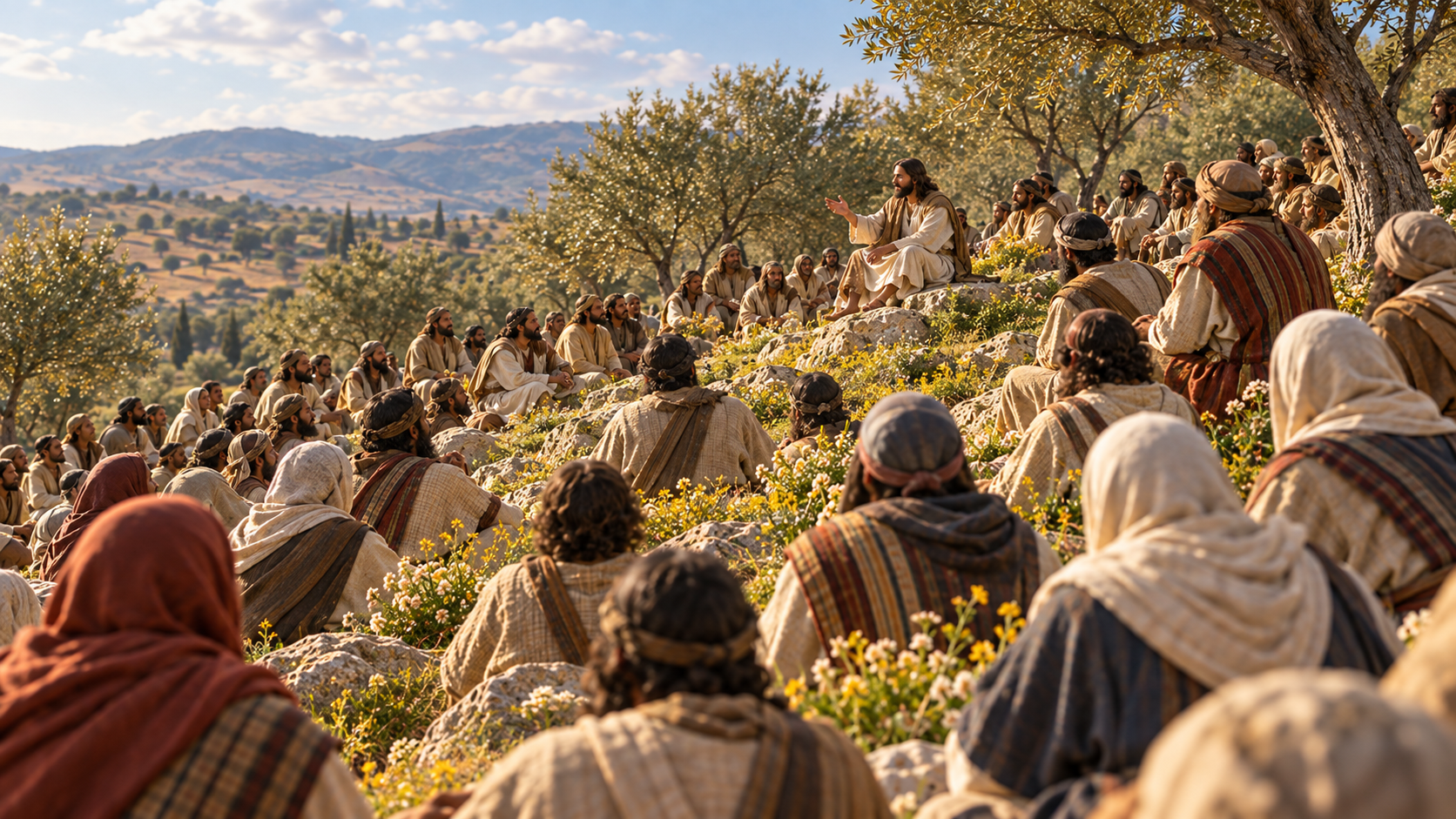
Jesus does not present prayer as a last resort. He tells His disciples to ask, seek, and knock. That is an invitation. To ask is to acknowledge that we do not have everything we need within ourselves. To seek is to move toward God rather than merely waiting for answers to appear. To knock is to keep coming to the One who has invited us near. This is not a formula for getting everything we want. Jesus makes that clear immediately. He describes a child asking his father for bread or fish, then points beyond even the best earthly father to the goodness of God. The confidence behind asking, seeking, and knocking is not that we can eventually wear God down. It is that He is a good Father. That changes how we pray. We do not come to Him as customers making demands. We come as children who are dependent upon Him. Sometimes what we need is provision. Sometimes wisdom. Sometimes direction. Sometimes correction. Sometimes the answer we desperately want is not the good thing our Father knows we need. But Jesus still tells us to come, Ask. Bring the need to Him instead of carrying it as though everything depends upon you, Seek. Pursue Him, His wisdom, His kingdom, and His will rather than merely pursuing the outcome you want from Him, Knock. Do not allow delay, uncertainty, or disappointment to drive you away from the Father. Continue bringing yourself before Him in faith. The deeper gift of prayer is not simply that circumstances may change. It is that we are changed as we draw near to God. Our desires are exposed. Our motives are confronted. Our dependence deepens. Our discernment grows. We begin to want not merely what God can give us, but God Himself. This is why persistence in prayer is different from trying to manipulate God. Persistence says: I still trust You enough to come back. There will be moments when the answer is not immediate. There will be doors we expected to open that remain closed. There will be prayers whose answers look different from what we imagined. But none of those things change the character of the One Jesus tells us to approach. The promise of Matthew 7 is not that God exists to fulfill every desire we bring before Him. The promise is that His children have been given access to their Father. So Ask. Seek. Knock. Not because God must be convinced to care, but because Christ has taught us that our Father already does.
historical context
During the first century AD, Jesus delivered the Sermon on the Mount during His Galilean ministry, addressing His disciples in the presence of gathered crowds. By the time Matthew records Jesus saying, “Ask, and it will be given to you; seek, and you will find; knock, and it will be opened to you,” Jesus has already taught His listeners about prayer, dependence upon their heavenly Father, freedom from anxiety, and seeking first the kingdom of God and His righteousness. The language of seeking God was also deeply rooted in Israel’s Scriptures. Deuteronomy 4:29 describes seeking the Lord and finding Him when He is sought wholeheartedly, while Jeremiah 29:12–13 joins prayer with seeking God and finding Him. Matthew 7:7 should not be treated as a direct quotation of either passage, but Jesus was teaching within a scriptural world in which seeking God was already familiar language for turning toward Him in dependence and trust. Jesus then places three familiar actions together: asking, seeking, and knocking. The emphasis should not be reduced to a technique for obtaining whatever a person desires. Jesus immediately continues with the illustration of a father responding to his child and concludes that the heavenly Father gives “good things” to those who ask Him. The foundation of the passage is therefore not the ability of the petitioner to pressure a reluctant God. It is the goodness of the Father. Jesus invites His followers to approach God actively and confidently, asking, seeking, and knocking while trusting the character of the One to whom they come.
Estimated Date
c. AD 29–30
Scripture does not preserve an exact date for the Sermon on the Mount. Luke places the beginning of John the Baptist’s ministry in the fifteenth year of Tiberius Caesar. On the standard reckoning of Tiberius’s reign from the death of Augustus in AD 14, this corresponds to approximately AD 29. Andrew E. Steinmann’s examination of first- and second-century literary, numismatic, and inscriptional evidence likewise concludes that Luke and his original readers were unlikely to have understood Tiberius’s fifteenth year as occurring before AD 29. Matthew places the Sermon after Jesus’ baptism and temptation, the beginning of His public preaching in Galilee, and the calling of His first disciples. Matthew 7:7–11 occurs toward the conclusion of that Sermon. Within a chronology that places the beginning of Jesus’ public ministry around AD 29, c. AD 29–30 is a reasonable working estimate for this teaching. It remains a historical reconstruction rather than a date explicitly supplied by Scripture. The surviving evidence does not allow us to identify a particular day, season, or year with certainty.
Key Insight
When Was Matthew’s Gospel Written?
The date Jesus originally gave this teaching and the date the Gospel of Matthew reached its written form are two different historical questions. Jesus’ teaching belongs to His earthly ministry in first-century Galilee, likely around the late AD 20s or early AD 30s. The Gospel that preserves the teaching for us was written later. Many modern New Testament scholars place the composition of Matthew in the AD 80s, often giving a broader range of approximately AD 80–90. This remains the predominant modern scholarly position, but it is not universally accepted. Arguments for an earlier date also remain part of the scholarly discussion. Some scholars contend that passages referring naturally to the Temple, sacrifices, the Temple tax, and related Jewish practices are more readily explained before Jerusalem and the Temple were destroyed in AD 70. Charles L. Quarles, for example, concludes that the oath formulas in Matthew 23:16–22 lend credible support to a pre-70 date, while also emphasizing that they cannot establish such a date conclusively. Later second-century Christian testimony also preserves an earlier dating tradition. Irenaeus reports that Matthew produced his Gospel while Peter and Paul were preaching and establishing the church in Rome, a chronology that would place its composition before AD 70. Because Irenaeus wrote considerably later than the events themselves, his testimony is historically significant but does not by itself settle the question. The safest conclusion is therefore that Matthew’s precise date of composition remains debated. What is clear within the Gospel itself is that Matthew presents “ask, seek, knock” within the Sermon on the Mount, alongside Jesus’ teaching about prayer, dependence upon God, seeking His kingdom, and the goodness of the heavenly Father.
Location
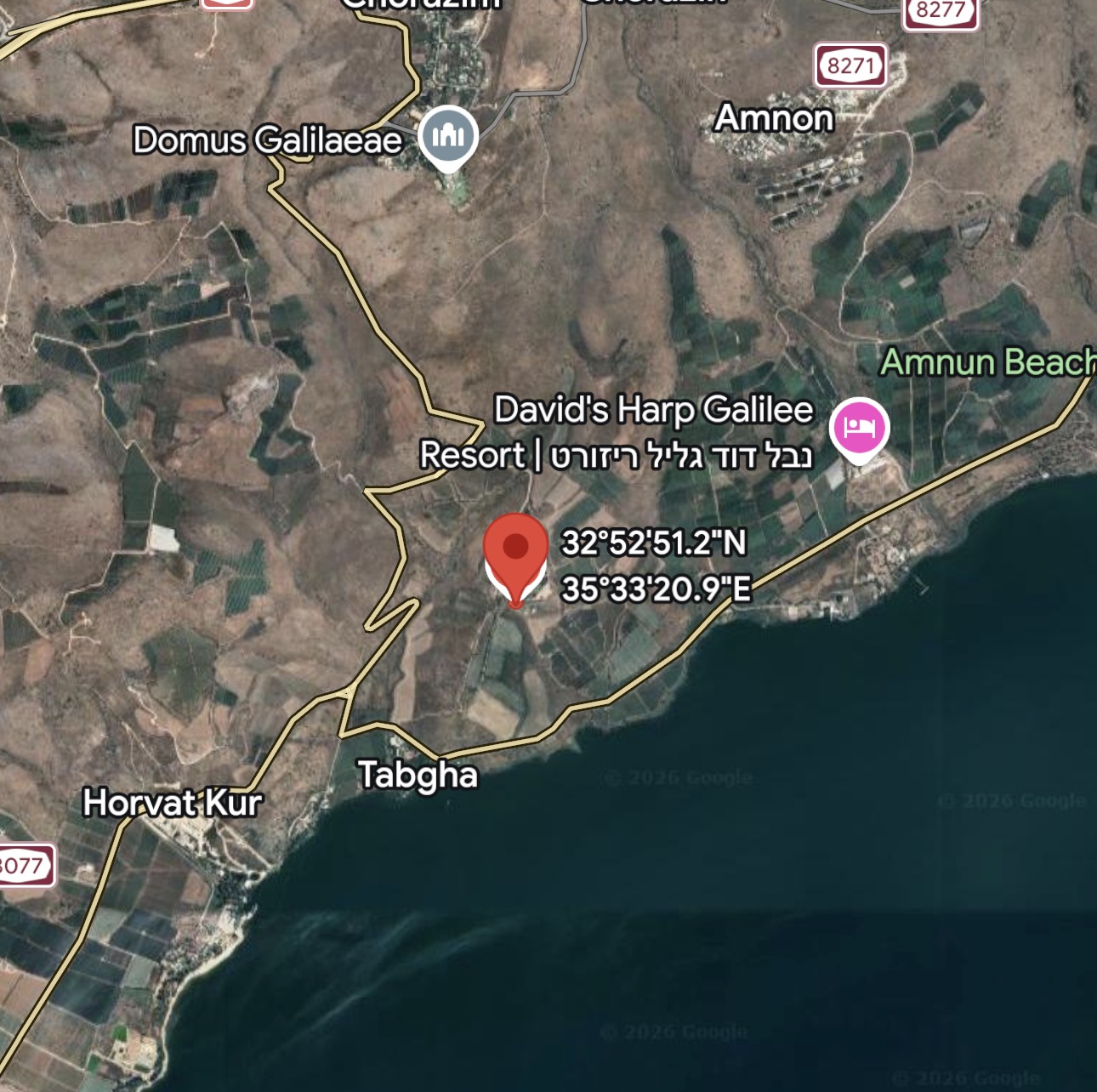
Mount of Beatitudes, Galilee — Traditional Location of the Sermon on the Mount
language insight
meaning
Αἰτεῖτε (aiteite) — ask, request ζητεῖτε (zēteite) — seek, search for κρούετε (krouete) — knock; to rap or strike at a door seeking entrance
language
Jesus most likely taught this audience in Aramaic, the language generally associated with His ordinary Galilean teaching environment. Hebrew and Greek were also present in first-century Jewish Palestine, and Scripture does not identify the language used on this occasion. Matthew preserves the teaching for us in Koine Greek.
original
Αἰτεῖτε · ζητεῖτε · κρούετε
transliteration
aiteite · zēteite · krouete
Matthew preserves three parallel commands: Αἰτεῖτε — Ask ζητεῖτε — Seek κρούετε — Knock All three are present active imperatives in the second-person plural, meaning Jesus is addressing the group rather than a single individual. These present-tense imperatives are often expressed devotionally as “keep asking, keep seeking, keep knocking.” That can reasonably communicate an ongoing posture of dependence, but the Greek grammar by itself does not mean, “repeat the same request until God finally gives in.” The three verbs are ordinary and concrete. αἰτέω (aiteō) means to ask or request. ζητέω (zēteō) means to seek or search for. κρούω (krouō) means to knock or rap, including knocking at a door for entrance. The images may suggest increasing physical involvement, moving from asking, to searching, to arriving and knocking, but the text does not establish a formal three-stage system of prayer. It is safer to understand them as three complementary pictures of active dependence upon God. There is also an important grammatical detail in Jesus’ response to these commands. “It will be given” and “it will be opened” are future passive forms, while “you will find” is future active. Verse 7 itself does not explicitly name the giver or the one who opens, but Jesus identifies the heavenly Father in the explanation that follows in Matthew 7:9–11. The language of seeking and finding would also have been familiar within Israel’s Scriptures. Deuteronomy 4:29 speaks of seeking the Lord and finding Him, while Jeremiah 29:12–13 joins prayer with seeking God and finding Him. Matthew does not identify either passage as a direct quotation here, so these are best understood as biblical background rather than Jesus’ explicitly stated textual source. The center of the passage is therefore not a formula for manipulating God through persistence. Jesus commands His disciples to ask, seek, and knock because He is teaching them to approach a good Father.