Collection 01
BE OF GOOD CHEER. RISE, HE IS CALLING YOU
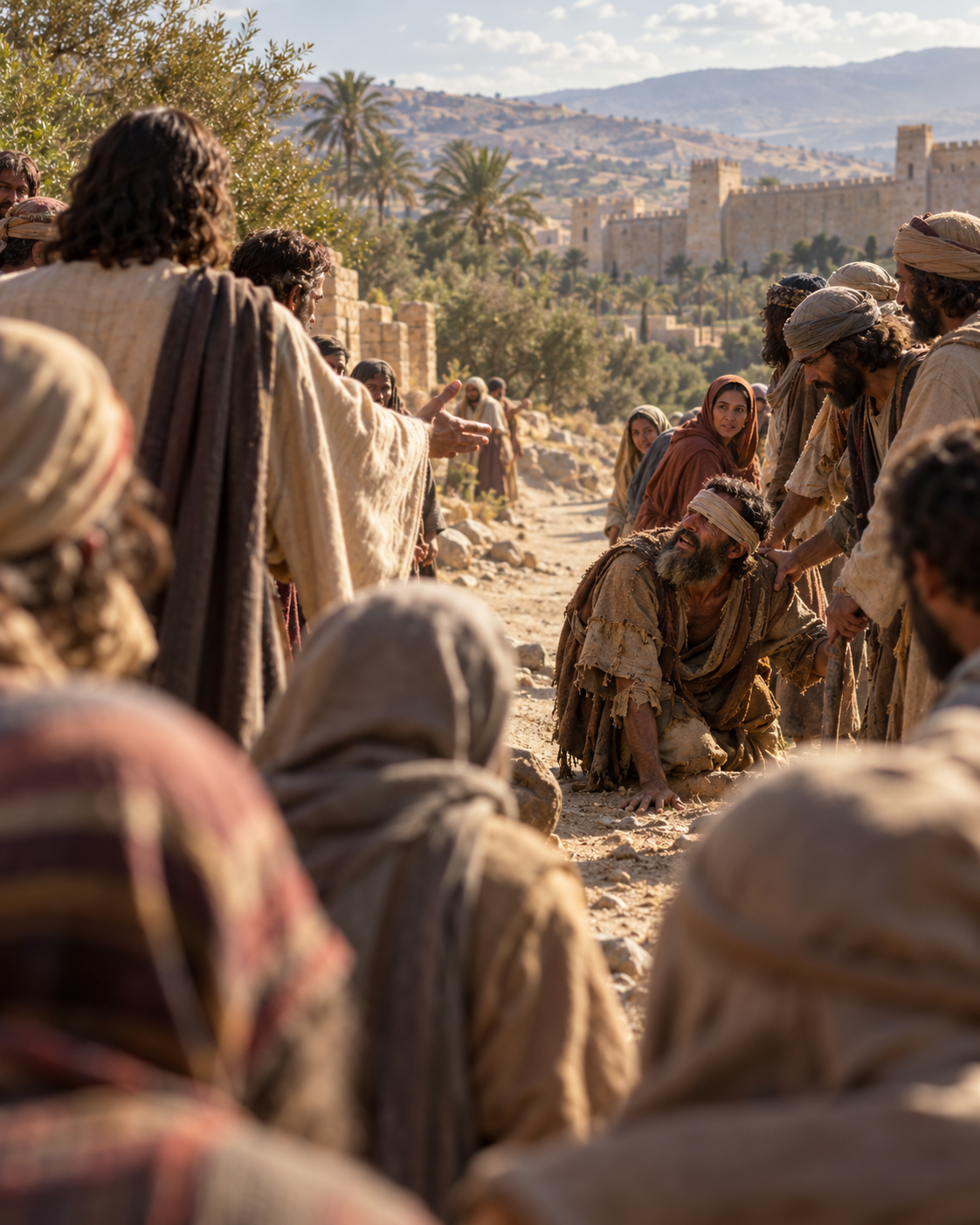
“So Jesus stood still and commanded him to be called. Then they called the blind man, saying to him, ‘Be of good cheer. Rise, He is calling you.’”
BIBLICAL INSIGHT
THE BLIND MAN WHO SAW Bartimaeus could not see Jesus. Yet when he heard that Jesus of Nazareth was passing by, he cried out, “Jesus, Son of David, have mercy on me!” That distinction matters. The crowd tells Bartimaeus where Jesus is from. Bartimaeus responds with who he believes Jesus is. “Jesus of Nazareth” identifies the man walking past him. “Son of David” reaches toward the promised King. Whatever Bartimaeus already knew about Jesus, in this moment he could not see the One passing before him. He heard that Jesus was near, and what he had heard was enough for him to cry out for mercy. And in Mark’s Gospel, that creates an extraordinary contrast. People with functioning eyes have been watching Jesus for chapters and still struggle to understand Him. Bartimaeus cannot see Him at all, yet he recognizes the Messiah. This is not the first time Mark has used blindness near a lesson about discipleship. In Mark 8, Jesus heals another blind man. His sight comes gradually. He first sees people indistinctly, “like trees, walking,” before Jesus touches him again and his vision becomes clear. Immediately afterward, Peter confesses that Jesus is the Christ. But Peter still does not fully understand what kind of Christ Jesus came to be. When Jesus begins speaking about rejection, suffering, death, and resurrection, Peter rebukes Him. From that moment forward, Jesus repeatedly teaches His disciples what following Him actually requires: deny yourself, take up your cross, lose your life for His sake, become last rather than seeking to be first, receive the kingdom like a child, give up what keeps you from following Him, and become a servant rather than pursuing greatness. And throughout those chapters, the disciples continue to struggle to see clearly. Then Mark brings us to another blind man: Bartimaeus. The first blind man receives sight at the beginning of this long section about discipleship. Bartimaeus receives sight at its end. Between those two healings, the question has never merely been whether someone can see with their eyes. The deeper question is whether they can see Jesus clearly enough to follow Him. That is why what happens immediately before Bartimaeus matters so much. James and John come to Jesus wanting something. Jesus asks them, “What do you want Me to do for you?” They ask for places of honor beside Him in His glory. Jesus responds by teaching them that His kingdom does not operate according to the pursuit of position and power. “Whoever desires to become great among you shall be your servant.” Then He tells them why: “For even the Son of Man did not come to be served, but to serve, and to give His life a ransom for many.” And then Jesus walks farther down the road. Bartimaeus cries out. Jesus stops. The One who has just declared that He came to serve now turns His attention toward a blind beggar sitting beside the road. The teaching becomes visible. The King serves the man the crowd is trying to silence. Then Jesus asks Bartimaeus almost the same question He had asked James and John: “What do you want Me to do for you?” The contrast could hardly be sharper. James and John wanted elevation. Bartimaeus wanted mercy. They asked for positions beside Jesus. Bartimaeus asked Jesus to let him see. “Rabboni, that I may receive my sight.” Before Jesus restores his sight, another revealing moment takes place. The crowd tells Bartimaeus to be quiet, but he cries out even louder. Then Jesus commands them to call him. Suddenly the voices that had tried to silence him are saying: “Be of good cheer. Rise, He is calling you.” The encouragement does not begin because Bartimaeus has already been healed. His circumstances have not changed yet. He is still blind. But Jesus has stopped. Jesus has called for him. That is enough for the crowd to say, “Be of good cheer.” Bartimaeus rises and comes to Christ. Jesus heals him and says, “Go your way; your faith has made you well.” Then Mark gives us one final detail that changes the entire ending. Bartimaeus does not simply receive his sight and disappear. He “followed Jesus on the road.” Jesus tells him to go his way. Bartimaeus makes Jesus’ way his way. And the road Jesus is walking is not leading toward comfort. It is leading toward Jerusalem, toward betrayal, rejection, suffering, and the cross. The disciples have spent chapters walking that road with Jesus while struggling to understand where it leads. Bartimaeus begins the story unable even to see the road. But once his eyes are opened, he follows Jesus on it. That is what makes this miracle larger than the restoration of physical sight. Mark has surrounded an extended teaching about discipleship with two stories about blind men receiving sight. The first sees gradually. The last receives sight and follows. And between them, Jesus has been teaching His disciples how to see Him clearly. Not merely as a miracle worker. Not merely as a conquering king. Not as someone who exists to elevate them into positions of greatness. But as the suffering Son of Man who came to serve, give His life as a ransom, and call His followers to walk the same road of humble obedience. Bartimaeus becomes a striking picture of that response. He recognizes the King before the crowd reaches Jerusalem. He cries for mercy while others tell him to be quiet. He comes when Jesus calls. He receives what only Jesus can give. And when Jesus gives him sight, Bartimaeus does not simply look around at the world now before him. He looks toward Christ and follows Him. There is also a warning here for those already near Jesus. The crowd was physically following Him while trying to prevent Bartimaeus from reaching Him. Proximity to Jesus did not automatically mean they understood His heart. They could walk beside the One who came to serve while treating a desperate man as an interruption. Jesus corrected that without delivering another sermon. He simply stopped. The crowd saw a beggar delaying the journey. Jesus saw a man calling for mercy. And before the King entered Jerusalem, one of the clearest pictures of discipleship came from the man who began the story blind. Bartimaeus received his sight. But the greater picture Mark leaves us with is this: He saw who Jesus was. And once he could see the road before him, he chose to follow Christ down it.
historical context
THE ROAD OUT OF JERICHO
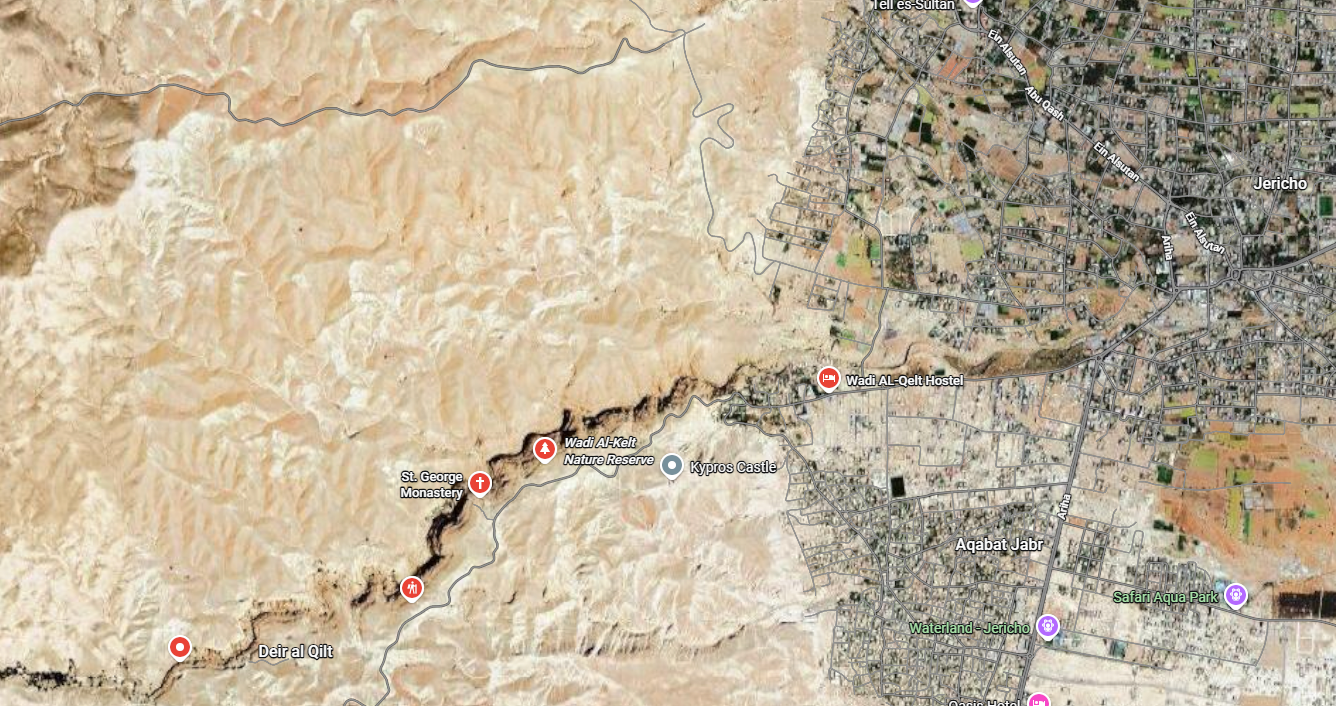
By the time Jesus reached Jericho, His name had traveled far beyond Nazareth. Reports of His teaching and miracles had spread throughout the region. People had heard of the sick being healed, demons being cast out, the lame walking, and even the dead being raised. Crowds now gathered wherever He went. Bartimaeus could not see what was happening around him. But he could hear. Somewhere along the way, news of Jesus had reached him. Whatever Bartimaeus already knew about Jesus, by the time Jesus passed through Jericho he had heard enough to believe that the man approaching on that road was no ordinary teacher. The setting makes the moment even more striking. First-century Jericho was an important and prosperous oasis in the Jordan Valley. Abundant water supported agriculture, date palms, and the cultivation of valuable balsam. Nearby, Herod the Great had developed an extensive royal complex near Wadi Qelt, complete with palaces, baths, gardens, and other signs of wealth and power. Travelers moving toward Jerusalem could pass through this area before beginning the difficult ascent west toward the city. Against that backdrop sat Bartimaeus. He was not standing inside a palace or occupying a position of influence. Mark introduces him sitting beside the road as a blind beggar. For someone unable to support himself through ordinary labor, a busy road offered access to travelers and pilgrims who might give alms. Life moved past him while he remained dependent upon the mercy of others. Then another crowd began to pass. Bartimaeus learned that it was “Jesus of Nazareth.” That told him who was approaching. His response revealed something deeper about who he believed Jesus to be. “Jesus, Son of David, have mercy on me!” “Son of David” carried royal and messianic significance. Israel had long lived with the promise that a king would come from David’s line. Bartimaeus heard that Jesus of Nazareth was passing by, yet he cried out to the Son of David. And the timing could hardly be more significant. Jesus was already moving toward Jerusalem. Not long before reaching Jericho, He had again told His disciples what awaited Him there. He would be betrayed, condemned, handed over to the Gentiles, mocked, scourged, killed, and then rise again. Yet those traveling closest to Him were still struggling to understand the kind of kingdom He had come to establish. James and John had recently asked Jesus for places of honor beside Him in His glory. Jesus answered by turning their understanding of greatness upside down. The rulers of the nations exercised authority over others, but His followers were not to pursue greatness that way. “The Son of Man did not come to be served, but to serve, and to give His life a ransom for many.” Then the journey continued. They came to Jericho. And beside the road sat Bartimaeus. When he began crying out for mercy, people in the crowd rebuked him and told him to be quiet. But Bartimaeus would not stop. He cried out even louder: “Son of David, have mercy on me!” It is worth considering what that moment must have sounded like. A large crowd was moving along the road. Pilgrims and travelers were making their way through Jericho. Jerusalem lay ahead. Jesus was approaching the final days of His earthly ministry. And through all of that movement came the voice of a blind beggar calling for mercy. Then Jesus stood still. The procession stopped. The man whom others had tried to silence now had the full attention of Christ. Jesus commanded that Bartimaeus be called, and the words of the crowd immediately changed: “Be of good cheer. Rise, He is calling you.” Bartimaeus rose and came to Jesus. After restoring his sight, Jesus told him, “Go your way.” But Mark records that Bartimaeus “followed Jesus on the road.” And that road was leading to Jerusalem. Within the next chapter, Jesus would enter the city while the crowds cried: “Blessed is the kingdom of our father David that comes in the name of the Lord!” Bartimaeus had already called Him: “Son of David.” There is one more detail in Mark’s account that is easy to overlook. We know this man’s name. Bartimaeus. Many people healed by Jesus remain unnamed in the Gospel accounts, yet Mark identifies this man and even explains that Bartimaeus means “the son of Timaeus.” Scripture does not tell us what became of him after this journey. It is possible that his name was preserved because he later became known among the early followers of Jesus, but the New Testament does not confirm that. What it does preserve is the final picture of him. The story begins with Bartimaeus sitting beside the road, unable to see the One passing before him. It ends with his eyes opened and his feet on that road. Following Jesus toward Jerusalem.
Estimated Date
c. AD 30 or AD 33
Scripture does not provide the exact calendar date of this encounter. Mark places it immediately before the Triumphal Entry, so it belongs very near the beginning of the final Jerusalem portion of Jesus’ earthly ministry. For consistency with our previous THE WORD chronology, AD 30 remains the working estimate for Jesus’ final year, while AD 33 remains a significant alternative proposed within New Testament chronology.
Key Insight
BEING NEAR JESUS IS NOT THE SAME AS SEEING LIKE JESUS
The crowd was already moving with Jesus, close enough to hear Him, follow Him, and witness what He was doing. Yet when Bartimaeus cried out for mercy, many of them treated him as an interruption and told him to be quiet. Jesus did not. He stopped. That moment should confront us because it reveals how possible it is to be near the things of God and still misunderstand the heart of Christ. The crowd was physically close to Jesus, but they did not yet see Bartimaeus the way Jesus did. To them, he was a voice disrupting the journey. To Jesus, he was a man crying for mercy. And this happens immediately after Jesus has taught His disciples that greatness in His kingdom is not found in position, power, or being served, but in serving others. Then, on the road outside Jericho, Jesus does not merely explain that truth again. He demonstrates it. The King stops for the beggar. The man the crowd tried to silence is brought forward, received by Christ, given sight, and sent on his way. Yet Bartimaeus does not simply return to the life he knew before. The man who began the story sitting beside the road ends it walking on that road behind Jesus. That is where the account becomes more than a story about physical blindness. Bartimaeus had already recognized something about Jesus before his eyes were opened. Once Christ gave him sight, his response was not merely to enjoy what had been restored to him. He followed the One who restored it. In that sense, Bartimaeus gives us a picture of discipleship. Seeing Jesus clearly is not merely recognizing who He is or knowing the right things about Him. It changes the direction of our lives. His mercy draws us toward Him. His call requires a response. And once we have truly seen who He is, following Him becomes more than admiration from the roadside. The crowd had been traveling with Jesus. Bartimaeus became a follower of Jesus. The difference is worth considering. This passage does not only ask whether we are close to Christ. It asks whether being close to Him is changing the way we see people, the way we understand mercy, and the direction in which we are walking.
Location
Jericho · Wadi Qelt · Road to Jerusalem

language insight
language
Koine Greek
original
θάρσει
transliteration
tharsei
meaning
Take courage · Be encouraged · Be of good cheer
The NKJV translates the word as “Be of good cheer.” The Greek comes from tharseō, meaning to have courage or take heart. Here it appears as a direct command: “Take courage.” That makes the crowd’s change especially noticeable. Moments earlier, they were rebuking Bartimaeus and trying to silence him. After Jesus commands them to call him, their words become: “Take courage. Rise. He is calling you.” The source of Bartimaeus’ encouragement is not that his circumstances have already changed. Jesus has stopped and called for him.