Collection 01
BELIEVE IN HIM WHOM HE SENT
"Jesus answered and said to them, 'This is the work of God, that you believe in Him whom He sent.'"
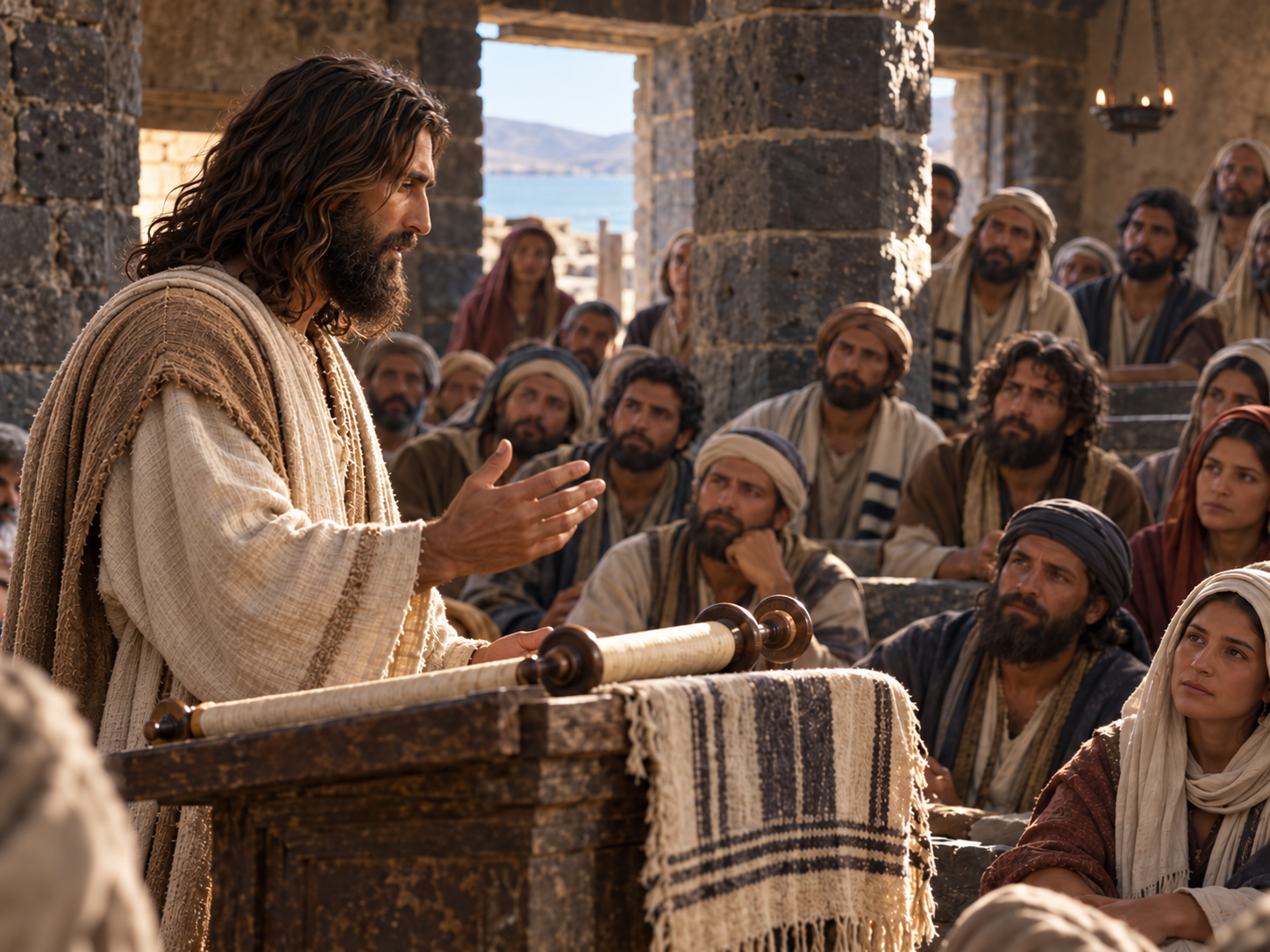
BIBLICAL INSIGHT
THE WORK IS TO BELIEVE IN THE ONE GOD SENT The crowd came to Jesus looking for more bread. The day before, they had watched Him feed thousands from five barley loaves and two small fish. But Jesus confronted what they were really seeking: “You seek Me, not because you saw the signs, but because you ate of the loaves and were filled.” They had experienced the miracle without yet understanding what the miracle was revealing. Jesus then told them not to labor merely for food that perishes, but for the food that endures to everlasting life, which the Son of Man will give them. That word matters: give. The crowd responds by asking: “What shall we do, that we may work the works of God?” They are asking for the required works. What must they perform? What must they accomplish? What must they do to obtain what Jesus is describing? Jesus answers their plural “works” with the singular: “This is the work of God, that you believe in Him whom He sent.” Jesus is not teaching that faith is another achievement by which a person earns eternal life. The surrounding passage moves in the opposite direction. The food that endures to eternal life is something the Son of Man gives, and Jesus later says that everyone who sees the Son and believes in Him has everlasting life. The point is that the crowd is looking for something they can perform, while Jesus directs them to someone they must trust. And the object of that faith is not vague. Jesus does not simply say, “Believe in God.” He says: Believe in Him whom He sent. Throughout John’s Gospel, Jesus repeatedly identifies Himself as the One sent by the Father. To believe in the One God sent is therefore to receive Jesus for who He truly is, to entrust oneself to Him, and to recognize that eternal life is found in Him rather than earned through human religious achievement. The irony becomes even sharper in the next verse. After Jesus tells them to believe in the One God sent, they ask Him for another sign so that they may believe. They had already eaten the multiplied bread. They had already seen the sign. But they still wanted another work from Jesus while asking what work they themselves must do. Jesus keeps bringing them back to the same place: Do not stop at the gift. Do not stop at the sign. Come to the One the sign reveals. The deepest question in John 6 is not, “What can I do for God?” It is: What will I do with the Son God has sent?
historical context
PASSOVER, MOSES, AND BREAD FROM HEAVEN
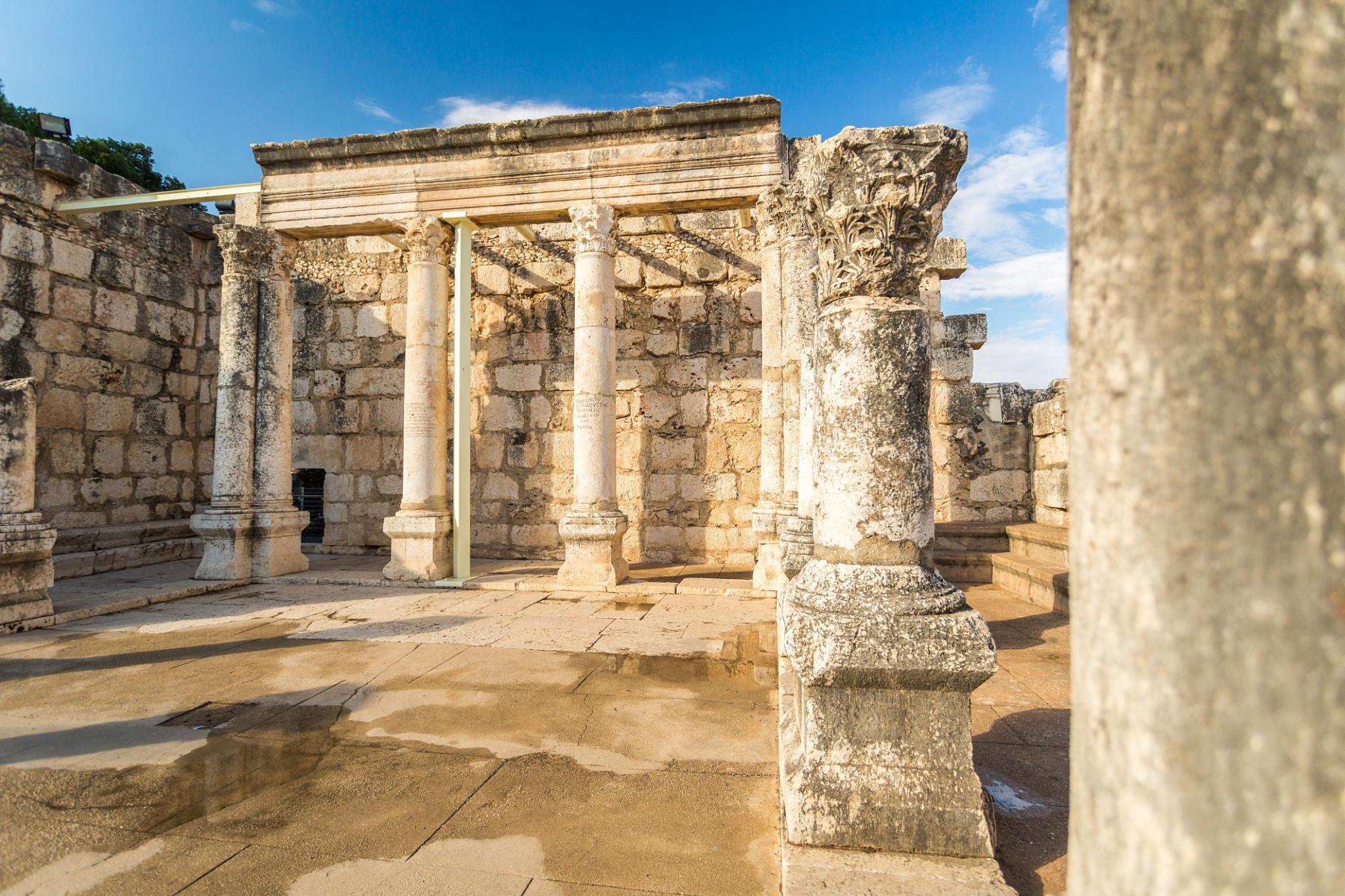
John tells us that the Passover was near when Jesus fed the five thousand. For a Jewish crowd, Passover was not merely a date on the calendar. It recalled Israel’s deliverance from Egypt, the leadership of Moses, the crossing of the sea, and God’s provision for His people in the wilderness. That background surrounds everything that happens in John 6. Jesus goes up a mountain. A great crowd follows Him. He miraculously provides bread. The people respond by declaring, “This is truly the Prophet who is to come into the world,” and then attempt to make Him king. Those reactions show that the crowd did not experience the feeding as an impressive meal alone. They were interpreting Jesus through Israel’s Scriptures and hopes. The language of “the Prophet” likely recalls the prophet like Moses promised in Deuteronomy 18, while the desire to make Jesus king shows how quickly the sign could become entangled with national and messianic expectation. The next day, the crowd crosses the sea looking for Him. Their later appeal to Moses and manna makes the Exodus background explicit: “Our fathers ate the manna in the desert; as it is written, ‘He gave them bread from heaven to eat.’” In Israel’s story, manna represented God’s miraculous provision in the wilderness. Around Passover, after Jesus had just fed thousands from a few loaves, that memory carried enormous weight. Yet John emphasizes that the crowd had not understood the sign correctly. They had received the bread and recognized that something extraordinary had happened, but they were still asking Jesus to prove Himself through another work. That helps explain the setting of their question: “What shall we do, that we may work the works of God?” This should not be reduced to the stereotype that first-century Jews believed they could simply earn salvation through good deeds. Jewish religious life was deeply shaped by covenant, Torah, worship, prayer, sacrifice, and obedience to God. Their question is better understood as asking what God requires of them, what deeds constitute faithful obedience. Jesus answers that question within a world already filled with Scripture, religious practice, and expectation. John later says that this teaching took place in a synagogue in Capernaum. First-century synagogues functioned as important local places where Jewish communities gathered for the public reading and explanation of Scripture. The surviving white-limestone synagogue at Capernaum is centuries later than Jesus, and archaeology cannot securely reconstruct the exact building in which this discourse occurred. Still, John places the conversation within a setting devoted to hearing and understanding God’s Word. The historical setting therefore brings several themes together at once: Passover. Moses. Manna. A prophet. A king. A synagogue. And a crowd asking what God requires. Into that world, Jesus tells them that the decisive response God requires is to believe in the One He has sent.
Estimated Date
Spring, c. AD 29 or AD 32
John explicitly says that “the Passover, a feast of the Jews, was near” when Jesus fed the five thousand. That places the events of John 6 in the spring, shortly before Passover. The feeding, the crowd’s pursuit of Jesus across the sea, and the Bread of Life discourse belong to the same sequence of events. John later states that Jesus taught these things in a synagogue in Capernaum. The precise calendar year depends on the chronology followed for Jesus’ crucifixion. If Jesus was crucified in AD 30, the Passover mentioned in John 6 would most naturally fall in AD 29. If the crucifixion occurred in AD 33, the corresponding Passover would fall in AD 32. John’s Gospel records multiple Passovers during Jesus’ ministry, including the Passover near John 6 and the final Passover associated with His crucifixion. That makes this event best understood as occurring roughly one year before the Passion.
Key Insight
BELIEVE IN THE ONE GOD SENT
The crowd asked Jesus what they needed to do for God. Jesus did not give them a list of works. He gave them Himself: “This is the work of God, that you believe in Him whom He sent.” They had followed Jesus because He gave them bread. But the bread was a sign pointing beyond the gift to the One who gave it. Jesus would soon tell them plainly: “I am the bread of life.” That is the heart of John 6. You can want what Jesus gives and still miss who Jesus is. The miracle was meant to lead them to Christ. The bread would perish The Son gives everlasting life. Do not stop at the gift. Believe in the One God sent.
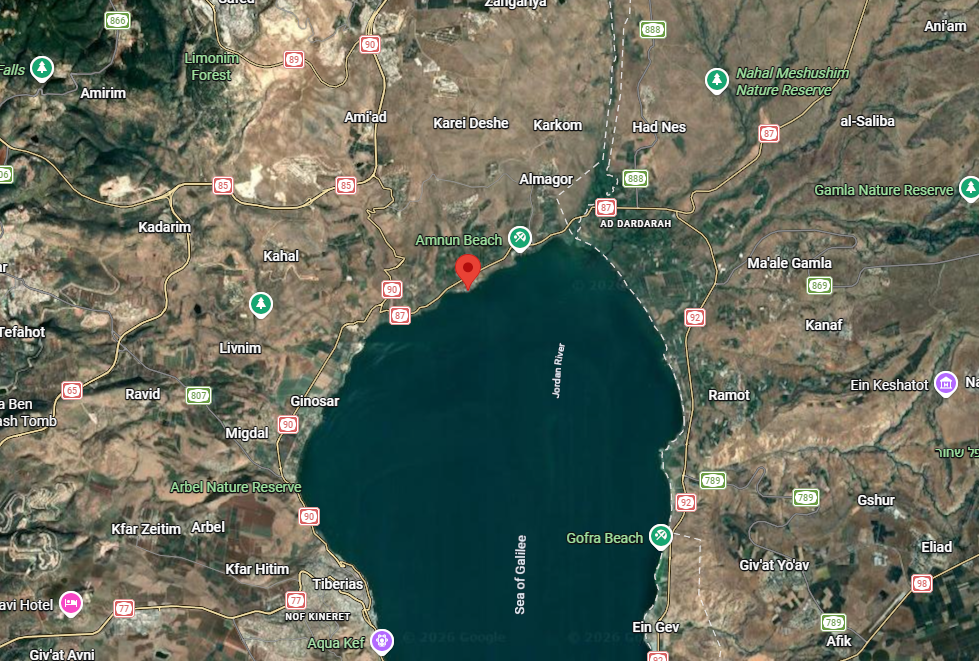
Location
Capernaum Synagogue Site · Approximate Setting of John 6:29
language insight
language
Koine Greek
original
ἔργα → ἔργον · πιστεύητε · εἰς ὃν · ἀπέστειλεν
transliteration
erga → ergon · pisteuēte · eis hon · apesteilen
meaning
works → work · that you believe · in Him whom · He sent
The force of Jesus’ answer becomes especially clear when verses 28 and 29 are read together. The crowd asks: τὰ ἔργα τοῦ θεοῦ “the works of God” ἔργα (erga) is plural: works. Jesus answers: τοῦτό ἐστιν τὸ ἔργον τοῦ θεοῦ “This is the work of God” Jesus changes their plural works to the singular work. Then He defines it: ἵνα πιστεύητε εἰς ὃν ἀπέστειλεν ἐκεῖνος “that you believe in Him whom He sent.” πιστεύω (pisteuō) means to believe, trust, or place faith in. But John does not leave the object of that faith undefined. Jesus says: εἰς ὃν “in Him whom” The faith Jesus calls for is directed toward a Person: the One God sent. That language is central throughout John’s Gospel. Jesus repeatedly presents Himself as the One sent by the Father, and eternal life is repeatedly connected with believing in Him. The phrase τὸ ἔργον τοῦ θεοῦ, “the work of God,” deserves some care. Taken by itself, the Greek expression can be understood in more than one way. But the immediate context strongly favors the sense of the work God requires: the crowd has just asked what they must do to perform God’s works, and Jesus answers their question by directing them to faith in the One God sent. That does not mean John teaches that faith is a meritorious achievement by which salvation is earned. The same chapter emphasizes what the Son gives, and elsewhere John emphasizes both the necessity of believing and God’s initiative in bringing people to Christ. There is also a small manuscript difference worth noting. Many modern critical Greek editions read πιστεύητε (pisteuēte), a present subjunctive, while the Byzantine and Textus Receptus tradition reads πιστεύσητε (pisteusēte), an aorist subjunctive. Both communicate the same central command here: believe in the One God sent. The linguistic movement of the passage is therefore remarkably simple: They ask about works. Jesus gives them one work. That work is defined as faith. And that faith has a specific object: the Son sent by the Father. The center is not human achievement. The center is Christ.