Collection 01
BLESSED ARE THE POOR
"Blessed are the poor in spirit, for theirs is the kingdom of heaven."

BIBLICAL INSIGHT
Jesus begins the Sermon on the Mount with words that overturn the way people normally think about blessing: “Blessed are the poor in spirit, for theirs is the kingdom of heaven.” He does not begin with strength, achievement, religious knowledge, moral accomplishment, wealth, or status. He begins with poverty. But Jesus is specific. He says “poor in spirit.” This is not a declaration that material poverty is inherently righteous, nor is Jesus teaching self-hatred, insecurity, or the denial of human dignity. He is describing the opposite of spiritual self-sufficiency: the person who recognizes that nothing he possesses, accomplishes, knows, or becomes can make him sufficient before a holy God. The poor in spirit come before God with need rather than credentials. That is what makes Jesus’ opening statement so striking. We naturally measure ourselves by what we have accomplished, what we know, how disciplined we have been, or how favorably we compare with others. Jesus removes all of that as a basis for confidence before God. The kingdom belongs to people who know they need the King. This does not mean poverty of spirit earns entrance into the kingdom. That would simply turn humility into another accomplishment. Jesus is describing someone who has stopped pretending he can provide spiritually for himself. The picture is one of empty hands. You cannot receive what you insist you do not need. That helps explain why this Beatitude comes first. Before Jesus speaks of mourning, meekness, mercy, purity, peacemaking, or enduring persecution, He begins with dependence. We do not enter the Christian life presenting God with our spiritual wealth. We begin by recognizing our need. This pattern runs throughout Scripture. Isaiah speaks of the one who is humble and contrite before God. David writes that God will not despise “a broken and a contrite heart.” Jesus later describes a Pharisee standing before God reciting his religious accomplishments while a tax collector will not even lift his eyes toward heaven, but pleads, “God, be merciful to me a sinner!” Jesus says it is the second man who goes home justified. The difference is not that one man has sinned and the other has not. The difference is that one knows he needs mercy. Then Jesus makes an extraordinary promise: “For theirs is the kingdom of heaven.” The tense matters. Jesus does not say merely that the kingdom will someday belong to them. He says, “theirs is the kingdom.” The same present-tense promise appears again in Matthew 5:10, framing the Beatitudes. Several of the promises between them look forward to what God will yet do: they shall be comforted, inherit, be filled, receive mercy, see God, and be called sons of God. But the opening declaration begins with something already true. The kingdom of heaven is not merely another name for where believers go after death. In Matthew, it speaks fundamentally of God’s reign and rule breaking into the world through the King. So Jesus begins His sermon with a paradox. Those who recognize that they cannot make themselves sufficient before God are precisely those to whom His kingdom belongs. That is why poverty of spirit is not despair. Despair says, “I have nothing, therefore there is no hope.” Poverty of spirit says, “I have nothing in myself that can make me right before God, therefore I must depend entirely upon Him.” That is where grace becomes visible. Pride cannot boast before God, and shame does not need to pretend before Him. The poor in spirit come honestly. They know their need, and Jesus calls them blessed. Not because emptiness itself is the blessing, but because the person who knows he is empty before God is prepared to receive what only God can give. “For theirs is the kingdom of heaven.”
historical context
The Historical Weight of “Poor in Spirit”
When Jesus said, “Blessed are the poor in spirit,” He was speaking into a Jewish world already familiar with the language of poverty before God. The form itself would not have sounded strange. Israel’s Scriptures often use blessed sayings, especially in the Psalms and wisdom literature, to describe the person who is truly favored when viewed from God’s perspective. The word poor also carried more than one layer of meaning. In the Hebrew Scriptures, it frequently referred to people who were literally poor, vulnerable, oppressed, or dependent upon others. God repeatedly commanded His people to defend and care for them. But poverty language also developed a spiritual dimension. The Psalms sometimes speak of the poor and needy in ways that express helplessness, affliction, or dependence upon God, not merely lack of money. Isaiah likewise speaks of the one who is poor and contrite in spirit. That background matters because Jesus is not inventing a completely new category. There is even evidence from Jewish literature around the time of the New Testament that language resembling “poor in spirit” was already known. The Qumran War Scroll uses a Hebrew expression commonly translated that way. This does not mean Jesus borrowed His teaching from that community, nor does it prove the phrase meant exactly the same thing there. It does show that poverty and spirit could be joined within the religious language of first-century Judaism. At the same time, actual poverty was a visible reality in Galilee. Jesus taught in an agricultural society shaped by land, fishing, harvests, labor, taxation, debt, and sharp differences in wealth and power. His hearers knew what dependence looked like. A poor person could not rely upon stored resources, social influence, or economic security the way a wealthy household could. Jesus takes that familiar reality of dependence and applies it to a person’s posture before God. That is the historical world behind the first Beatitude. Jesus speaks to people who knew both the lived reality of poverty and the scriptural language of humble dependence upon God. Into that world He announces that the kingdom of heaven belongs not to the self-satisfied, but to those who know their need before Him.
Estimated Date
c. AD 29–30
Matthew does not give a precise calendar date for Matthew 5:3. The verse belongs to the opening of the Sermon on the Mount during Jesus’ Galilean ministry. Consistent with the chronology used throughout this Collection, the safest estimate is c. AD 29–30. Scripture does not provide the exact day, month, or year.
Key Insight
The Kingdom Begins with Empty Hands
The opening words of the Beatitudes matter because Jesus does not begin by telling His disciples what they must accomplish. He begins by describing people who know they have nothing to boast about before God. “Blessed are the poor in spirit.” This protects the Beatitude from becoming another achievement. Poverty of spirit is not something we perform well enough to impress God. It is the end of pretending that we can. It is the recognition that we cannot stand before God on the basis of our own strength, righteousness, knowledge, discipline, or worthiness. The poor in spirit know that they come to God in need. That is why this Beatitude stands at the beginning. The kingdom life Jesus describes cannot be built on self-sufficiency. Mercy, righteousness, purity, meekness, peacemaking, and endurance all begin here. Before anything else, there must be the recognition that we need God more than we can provide for ourselves. And Jesus makes the promise in the present tense: “for theirs is the kingdom of heaven.” He begins with empty hands, then announces that the kingdom belongs to those who know they need Him.
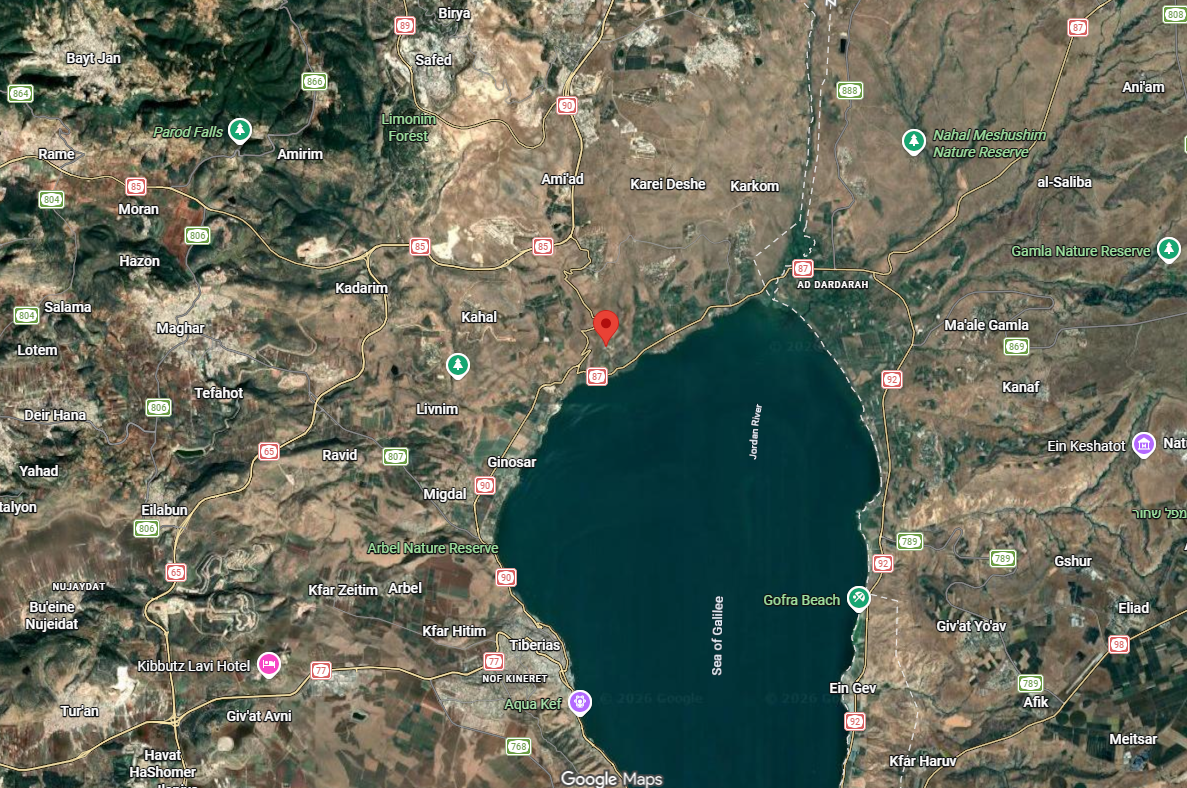
Location
Mount of Beatitudes, Galilee — Traditional Setting of the Sermon on the Mount

language insight
language
Koine Greek
original
Μακάριοι · πτωχοὶ τῷ πνεύματι · βασιλεία τῶν οὐρανῶν
transliteration
makarioi · ptōchoi tō pneumati · basileia tōn ouranōn
meaning
Blessed / truly fortunate · poor or destitute in spirit · kingdom / reign of heaven
Three expressions give Matthew 5:3 its force. Μακάριοι (makarioi), translated “blessed,” describes someone who is truly fortunate or favored from God’s perspective. It can overlap with the idea of happiness, but Jesus is saying more than that the poor in spirit feel cheerful. He is declaring their condition blessed in the kingdom of God. πτωχοὶ (ptōchoi) is a strong word for poverty. It can describe someone poor, destitute, or dependent upon others. Jesus qualifies it with τῷ πνεύματι (tō pneumati), “in spirit.” So Jesus is not primarily describing financial poverty, low self-worth, a weak personality, or someone lacking the Holy Spirit. He is describing the recognition of profound spiritual need before God. The opposite is spiritual self-sufficiency. Finally, Jesus says: αὐτῶν ἐστιν ἡ βασιλεία τῶν οὐρανῶν “theirs is the kingdom of heaven.” ἐστιν (estin), “is,” is present tense. Jesus is not speaking only of a future reward. The poor in spirit already stand in relationship to God’s kingdom, even as its fullness still lies ahead. βασιλεία (basileia) means more than simply “going to heaven when you die.” It can refer to kingdom, kingship, or royal reign. In Matthew, “the kingdom of heaven” speaks fundamentally of the reign of God. The Greek sharpens the paradox: Those who recognize their spiritual poverty are declared blessed because God’s kingdom belongs to them.