Collection 01
HE WHO FOLLOWS ME SHALL NOT WALK IN DARKNESS
"Then Jesus spoke to them again, saying, 'I am the light of the world. He who follows Me shall not walk in darkness, but have the light of life.'"
BIBLICAL INSIGHT
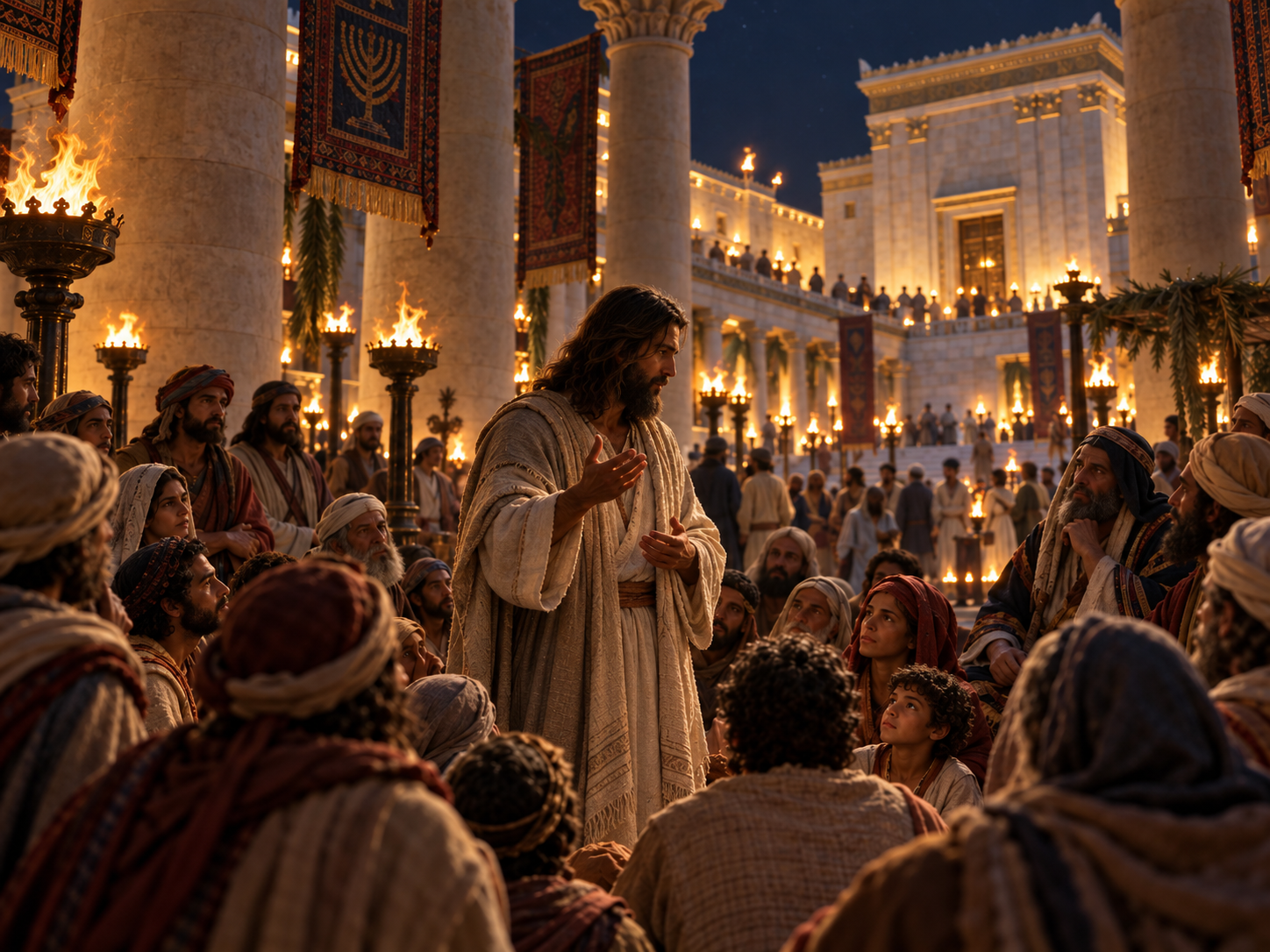
Jesus does not say merely that He brings light, teaches light, or points people toward light. He says, “I am the light of the world.” That claim reaches far beyond the language of a teacher offering wisdom. In John’s Gospel, light is tied to life, revelation, truth, and the self-disclosure of God. John has already said of the Word, “In Him was life, and the life was the light of men,” and, “That was the true Light which gives light to every man coming into the world.” By the time Jesus speaks in John 8:12, the Gospel has already taught the reader to understand light as something bound up with His very identity. That is why the promise of the verse is so important: “He who follows Me shall not walk in darkness, but have the light of life.” Jesus does not speak here only about intellectual confusion. In John, darkness includes spiritual blindness, unbelief, alienation from God, and the realm in which sin keeps people from seeing the truth about Christ. To walk in darkness is to live outside the saving light that comes from Him. The answer Jesus gives is not self-discovery, self-improvement, or religious activity detached from Him. It is following Him. The one who follows Jesus does not merely receive better information. He comes into the light that belongs to life itself. Christ is not only the revealer of truth. He is the Light by whom truth is seen rightly. And He is not the light of Israel only, but “the light of the world.” The scope of the claim matters. Jesus is presenting Himself as the One in whom the darkness of the world is answered. The need is universal, and so is the significance of His person. John 8:12 therefore calls the reader to more than admiration. It calls for discipleship. The promise belongs to the one who follows Christ.
historical context
LIGHT IN THE TEMPLE
John places this scene in Jerusalem during the Feast of Tabernacles. That matters. The Feast of Tabernacles was one of Israel’s major pilgrimage festivals. It remembered God’s provision during Israel’s wilderness journey and celebrated His continuing faithfulness. By the time of Jesus, the feast had become associated with strong themes of rejoicing, water, and light. Many scholars connect John 8:12 with the illumination associated with the feast, especially the lighting of large lamps in the temple courts. Later Jewish sources describe the celebration in vivid terms, and many interpreters believe that background helps explain why Jesus’ claim in John 8:12 would have sounded so striking. John does not explicitly say that Jesus spoke these words during the lamp-lighting ceremony itself, so that point should be made carefully. Still, the broader festival setting and temple location make the connection historically and contextually significant. John 8:20 adds an important detail: Jesus spoke these words “in the treasury, as He taught in the temple.” The treasury is commonly associated with the Court of the Women, a prominent area within the temple complex. That means Jesus’ declaration was not made in private. It was spoken in a public worship setting, in the heart of Jerusalem’s religious life. The Old Testament background deepens the moment even more. Israel had known the LORD’s guidance in the wilderness through the pillar of cloud by day and fire by night. The prophets also spoke of God’s saving light and of a coming light for the nations. Against that background, Jesus’ words are not a vague metaphor. He is placing Himself within the very themes Scripture uses for God’s guidance, salvation, and revelation. So when Jesus says, “I am the light of the world,” He is not making a small devotional point. He is speaking into a temple setting, during a festival rich with light imagery, and declaring that in Him the reality toward which those signs pointed has arrived.
Estimated Date
Autumn, c. AD 29 or AD 32
John places the surrounding events in Jerusalem at the Feast of Tabernacles, an autumn pilgrimage festival. John 8:20 further locates this teaching within the temple treasury area. The precise day on which Jesus spoke John 8:12 is not stated. The safest historical placement is therefore during, or very shortly after, the Feast of Tabernacles in the final year before His crucifixion. The calendar year depends on the chronology followed for the Passion. If Jesus was crucified in AD 30, this feast falls in autumn AD 29. If the crucifixion occurred in AD 33, it falls in autumn AD 32. John later places Jesus in Jerusalem at the Feast of Dedication in winter, followed by the final Passover, which helps establish the sequence even though Scripture does not provide an absolute calendar year for John 8:12.
Key Insight
CHRIST IS NOT POINTING TO THE LIGHT. HE IS THE LIGHT.
Jesus does not say, “I know the way out of darkness.” He says: “I am the light of the world.” That is the center of the verse. The darkness John describes is deeper than confusion, uncertainty, or difficult circumstances. It is the darkness of unbelief and sin, the condition of a world separated from the life and truth found in God. Jesus does not offer humanity a better philosophy for navigating that darkness. He calls people to follow Him. And His promise is not that those who follow Him will never suffer, struggle, or face circumstances they do not understand. His promise is that darkness will no longer define the way they walk: “He who follows Me shall not walk in darkness, but have the light of life.” John has already told us why: “In Him was life, and the life was the light of men.” The Light and the Life are found in the same Person. Christianity is therefore not ultimately about asking Jesus to illuminate the path we have chosen for ourselves. It is about coming after Him, trusting Him, and walking where He leads because life is found in Him. If you remember nothing else from this passage, remember this: The answer to darkness is not merely better direction. It is Christ Himself. Follow the Light.
Location
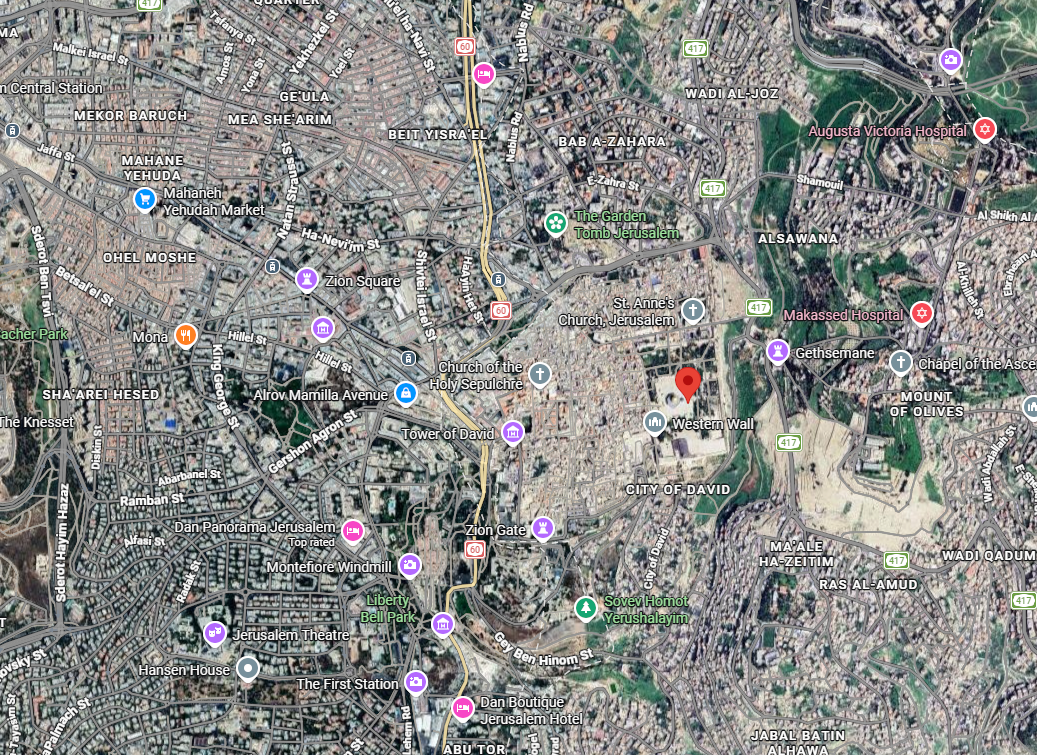
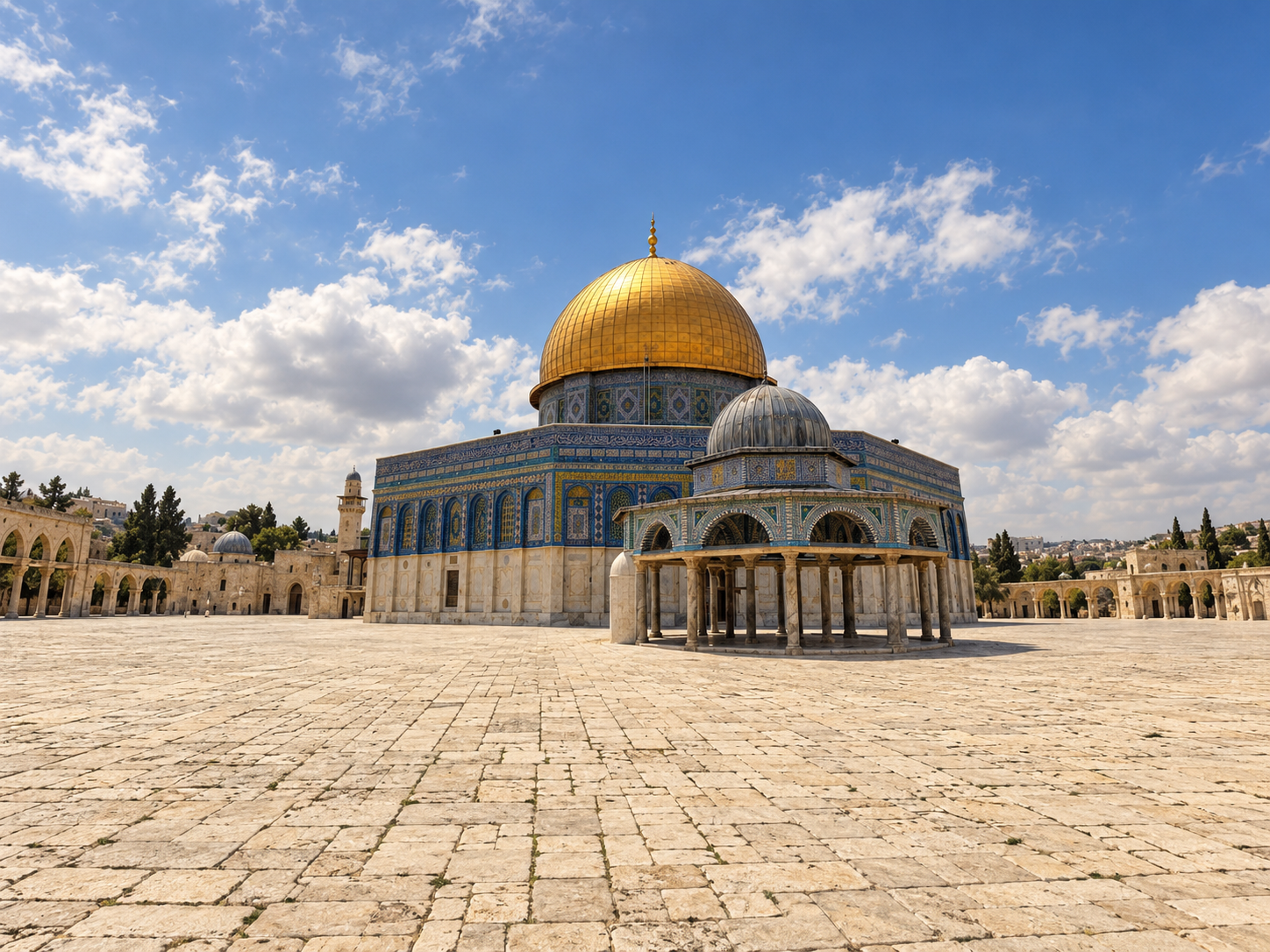
Jerusalem Temple Complex, Approximate Setting of John 8:12
language insight
language
Koine Greek
original
ἐγώ εἰμι · ὁ ἀκολουθῶν ἐμοί · οὐ μὴ περιπατήσῃ · τὸ φῶς τῆς ζωῆς
transliteration
egō eimi · ho akolouthōn emoi · ou mē peripatēsē · to phōs tēs zōēs
meaning
I am · the one who follows Me · shall certainly not walk · the light of life
Jesus begins with the direct declaration: ἐγώ εἰμι τὸ φῶς τοῦ κόσμου “I am the light of the world.” The verb εἰμι (eimi) already means “I am,” yet John also records the explicit pronoun ἐγώ (egō), “I.” Together the words place unmistakable emphasis on Jesus Himself. The statement is not merely about something He teaches or possesses. He identifies Himself as “the light of the world.” φῶς (phōs) means “light,” and John has already joined light with life in the opening of his Gospel: “In Him was life, and the life was the light of men.” John 8:12 continues that relationship between Christ, light, and life. Jesus then describes: ὁ ἀκολουθῶν ἐμοί “the one who follows Me.” ἀκολουθῶν (akolouthōn) comes from akoloutheō, meaning to follow or accompany. In the Gospel context, the person receiving the promise is not simply someone who recognizes that Jesus is light, but the one who follows Him. The strongest grammatical feature of the promise comes next: οὐ μὴ περιπατήσῃ ἐν τῇ σκοτίᾳ The combination οὐ μή (ou mē) with περιπατήσῃ (peripatēsē) forms an emphatic negation. Jesus is not expressing a weak possibility. The force is: “shall certainly not walk in darkness.” περιπατέω (peripateō) literally means “to walk,” but it can also describe the course or manner of a person’s life. σκοτία (skotia) means “darkness,” a word John repeatedly uses in contrast with the light revealed in Christ. Then Jesus gives the positive promise: ἀλλ’ ἕξει τὸ φῶς τῆς ζωῆς “but will have the light of life.” ἕξει (hexei) means “will have.” Jesus does not say His follower will merely see the light from a distance. The follower will have the light of life. The Greek therefore moves in a deliberate progression: Christ identifies Himself as the Light. He calls a person to follow Him. He emphatically denies that follower’s continuing path in darkness. And He promises the light of life. The center of the sentence is not simply light versus darkness. It is Jesus Himself.