Collection 01
TAKE UP YOUR CROSS DAILY
"And He said to them all, 'If anyone desires to come after Me, let him deny himself, and take up his cross daily, and follow Me.'"

BIBLICAL INSIGHT
Jesus has just asked His disciples one of the most important questions they will ever answer: “Who do you say that I am?” Peter responds: “The Christ of God.” But Jesus does not allow that confession to remain disconnected from the Messiah He truly is. Immediately afterward, He tells them that the Son of Man must suffer, be rejected, be killed, and be raised on the third day. Then Jesus turns from what will happen to Him to what it means to follow Him: “If anyone desires to come after Me, let him deny himself, and take up his cross daily, and follow Me.” The order matters. Jesus does not first speak about the disciples’ cross. He speaks about His own suffering. Only then does He describe the life of the person who follows Him. “If anyone desires to come after Me…” Jesus is describing discipleship. The invitation is open: anyone who desires to come after Him. But Jesus immediately removes any idea that following Him can be built around preserving personal control. “Let him deny himself.” Self-denial here is deeper than giving something up. Jesus is not merely talking about refusing a pleasure, practicing discipline, or denying ourselves something we want. The language carries the force of denying or disowning. The same basic Greek verb is later used when Peter denies knowing Jesus. To deny oneself, then, is not to despise oneself or pretend human life has no value. Scripture does not teach self-hatred. It is to refuse to treat the self as the highest authority. My desires do not outrank Christ. My comfort does not outrank Christ. My reputation does not outrank Christ. Even the preservation of my own life does not outrank Christ. The verses immediately following make that clear. Jesus speaks of the person who tries to save his life and the person willing to lose it for His sake. The issue is allegiance. Then Jesus says: “Take up his cross daily.” For modern readers, the cross can be so familiar that its force is easily softened. It appears on churches, jewelry, artwork, clothing, and graves. The people who first heard Jesus did not know the cross that way. They knew it as an instrument of Roman execution. To take up a cross was not a picture of carrying an ordinary inconvenience. Jesus was invoking an image associated with condemnation, shame, surrender, and death. He was not saying that every hardship is “our cross.” An irritating person is not automatically our cross. A difficult workday is not our cross. Ordinary suffering is not what gives this image its meaning. The cross is connected to following Christ at the cost of self. Luke adds a word that makes the demand even more searching: “daily.” Jesus is not describing one dramatic moment of courage. Discipleship requires a repeated surrender. There may be moments when following Christ carries an extraordinary cost, but the pattern begins long before such moments arrive. Day after day, the follower of Jesus relinquishes the right to place self above the One being followed. That does not mean Christians should pursue suffering. Jesus does not command His disciples to manufacture pain, seek persecution, or prove their devotion through self-inflicted hardship. The command is not simply: Take up a cross. It ends: “and follow Me.” That is the center of the verse. Self-denial has a direction. Cross-bearing has a destination. Jesus. Christian discipleship is not suffering for suffering’s sake. It is following Christ wherever faithfulness to Him leads, even when obedience costs something we would rather keep. That is why this verse cannot be reduced to self-improvement. Jesus is not offering a strategy for becoming more disciplined. He is describing a transfer of authority. The disciple no longer asks first, “What do I want?” The controlling question becomes, “Where is Christ leading?” Sometimes those paths will align with what we naturally desire. Sometimes they will not. Luke 9:23 prepares us for the second possibility. Following Jesus means He retains the right to lead when obedience becomes uncomfortable, costly, misunderstood, or personally painful. And this is spoken immediately after Jesus reveals that His own road will lead through suffering before resurrection. The disciple does not walk a road greater than the Master. Jesus goes first. Then He says: “Follow Me.” That is the weight of Luke 9:23. Deny yourself does not mean hate yourself. Take up your cross does not mean treat every inconvenience as persecution. Daily does not allow discipleship to become an occasional act of devotion. And follow Me does not allow the cross to become the center instead of Christ. The cross describes the cost. Christ remains the destination. The question Luke 9:23 places before every disciple is not whether following Jesus will always be comfortable. Jesus has already removed that expectation. The question is whether Jesus remains worthy of following when obedience requires us to surrender what we would have chosen for ourselves. He does not conceal the cost. He tells us plainly. Deny yourself. Take up your cross daily. Follow Me.
historical context
A Major Turning Point in Jesus’ Ministry
Peter has just confessed Jesus as “the Christ of God.” Immediately afterward, Jesus tells His disciples that He will suffer, be rejected by the religious leaders, be killed, and be raised on the third day. Then He speaks about a cross. For His original hearers, that word carried a very different emotional weight than it does for most people today. The cross had not yet become a Christian symbol. It belonged to the world of Roman punishment. Crucifixion was designed not merely to kill but to expose, humiliate, and publicly destroy the condemned. Roman authorities used forms of crucifixion particularly against people of low status, enslaved persons, and those viewed as threats to order. Ancient evidence also indicates that condemned persons could be made to carry the wooden execution beam toward the place of punishment, although the precise procedures were not identical in every case. So when Jesus said, “take up his cross,” His audience would not have pictured jewelry, church architecture, or a generalized symbol for hardship. They would have heard the language of a condemned person walking toward death. That makes the timing of Jesus’ words important. Only moments earlier, He has told the disciples that He Himself will be rejected and killed. The cross is therefore not introduced as an abstract spiritual metaphor disconnected from Jesus’ mission. He is beginning to show His disciples that The Messiah they have confessed will suffer, and that following Him will require a willingness to surrender their own claims to safety, status, and self-preservation. The Synoptic parallels also help us locate the broader setting. Luke does not name the place where this conversation occurred. Mark and Matthew, however, place Peter’s confession in the region of Caesarea Philippi. Caesarea Philippi lay north of the Sea of Galilee in the territory of Philip the tetrarch. The city had strong Greco-Roman associations, including a sanctuary connected with the god Pan and expressions of imperial culture. Because Luke does not name the location, we should not claim that Jesus necessarily spoke Luke 9:23 at a particular shrine or exact spot. The Caesarea Philippi region is best understood as the likely setting supplied by the parallel Gospel accounts. Against that first-century background, Jesus’ language would have been severe and unmistakable. A person carrying a cross was not negotiating the terms of the journey. The sentence had already been handed down. Jesus takes that image of surrendered control and applies it to discipleship. Then Luke records one additional word: “daily.” The imagery remains severe, but the application is not limited to literal martyrdom. The disciple is called to live repeatedly in the posture represented by the cross: self surrendered, Christ followed. Jesus would eventually carry the reality toward which His words pointed. For those hearing Him in Luke 9, that still lay ahead. But He was already teaching them what following Him would mean.
Estimated Date
c. AD 29–32
Luke places this teaching during the later Galilean phase of Jesus’ ministry, after the feeding of the five thousand and Peter’s confession but before Jesus begins the deliberate journey toward Jerusalem in Luke 9:51.
Key Insight
Why Does Luke Say “Daily”?
Matthew and Mark preserve parallel sayings in which Jesus commands His followers to take up the cross and follow Him. Luke records an additional word: “daily.” That word prevents the command from being understood only as a single heroic moment at the end of someone’s life. A person can physically die only once. Luke’s “daily” language applies the imagery of the cross to the continuing life of discipleship. The point is not that a Christian must somehow recreate crucifixion every morning. It is that the surrender represented by the cross is not a one-time declaration. Following Jesus repeatedly confronts the question of who has final authority. Christ or self. That is why “daily” belongs naturally beside “deny himself.” The disciple repeatedly relinquishes the claim to place personal desire, comfort, reputation, or self-preservation above allegiance to Christ. The cross may describe the severity of the surrender. “Daily” describes its rhythm. And “follow Me” gives it its purpose.
Location
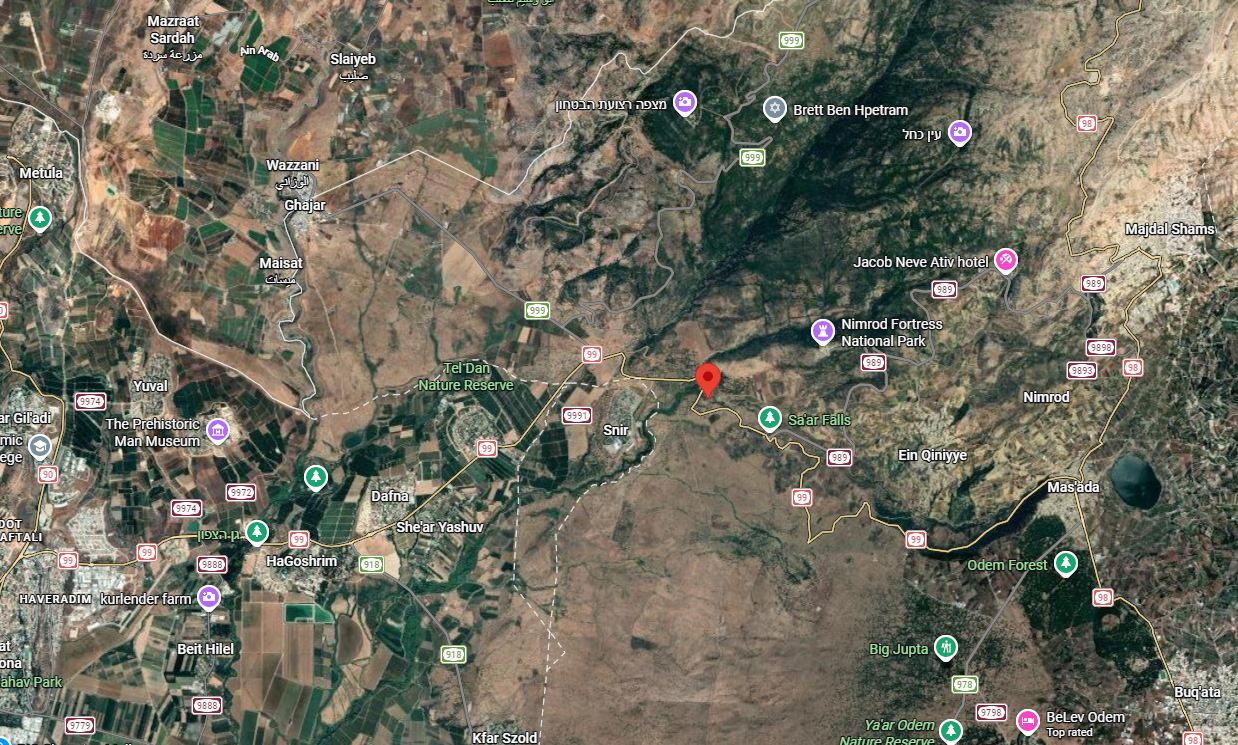
Caesarea Philippi Region — Likely Synoptic Setting of Luke 9:23

language insight
language
Koine Greek
original
ἀρνησάσθω ἑαυτόν · ἀράτω τὸν σταυρὸν αὐτοῦ καθ’ ἡμέραν · ἀκολουθείτω μοι
transliteration
arnēsasthō heauton · aratō ton stauron autou kath’ hēmeran · akoloutheitō moi
meaning
Deny oneself · take up one’s cross daily · follow Me
Luke 9:23 is built around three direct commands: deny yourself, take up your cross daily, and follow Christ. ἀρνησάσθω (arnēsasthō), from ἀρνέομαι, means to deny, disown, or refuse association with. Luke later uses the same verb when Peter denies knowing Jesus. Here, however, the object is oneself. Jesus is calling the disciple to surrender self as the controlling authority of life, not to practice self-hatred. ἀράτω (aratō), from αἴρω, means to take up or lift. σταυρός (stauros) refers to the cross, carrying the severe imagery of Roman execution rather than an ordinary inconvenience. Luke then adds καθ’ ἡμέραν (kath’ hēmeran): “daily” or “each day.” This makes cross-bearing an ongoing posture of discipleship, not merely a single dramatic act. Finally, ἀκολουθείτω μοι (akoloutheitō moi) means “let him follow Me.” The progression is deliberate: surrender self, accept the cost of discipleship daily, and follow Christ.