Collection 01
THAT WE MAY DIE WITH HIM
“Then Thomas, who is called the Twin, said to his fellow disciples, “Let us also go, that we may die with Him.”
BIBLICAL INSIGHT
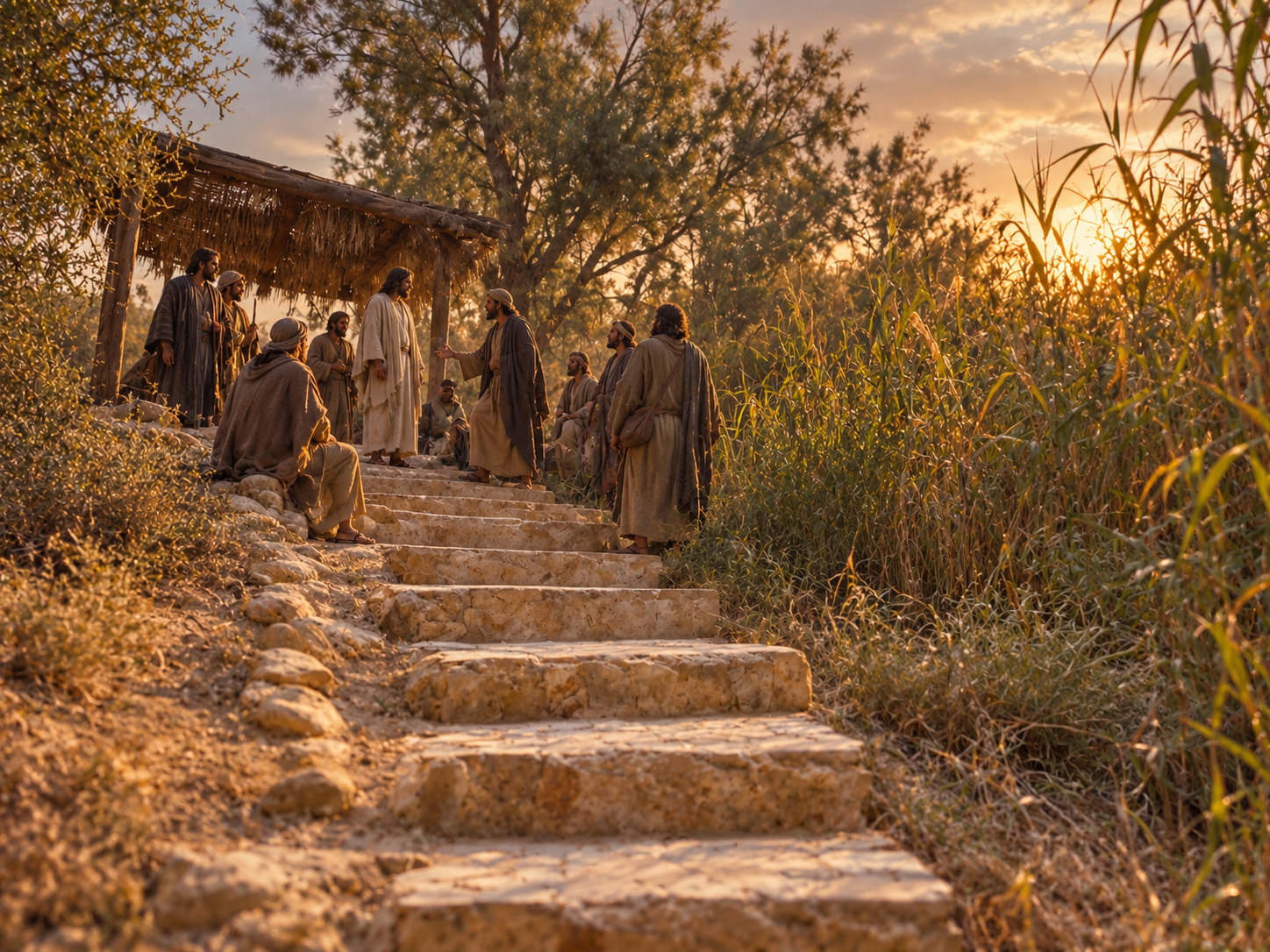
Thomas is remembered for doubt. But the first time John lets us hear Thomas speak, he is not asking for evidence. He is volunteering to follow Jesus into danger. Jesus has decided to return to Judea. The disciples know what waits there. Not long before, people in Jerusalem had taken up stones against Him and attempted to seize Him. When Jesus announces that they are going back, the disciples immediately remind Him of the danger. Thomas does not pretend that danger is insignificant. He looks at his fellow disciples and says: “Let us also go, that we may die with Him.” There is real courage in those words. Thomas believes following Jesus back toward Judea may cost them their lives, and yet his response is not to remain somewhere safer while Jesus goes on alone. Let us go with Him. But John also allows us to see the limits of Thomas’s understanding. Thomas sees death ahead. Jesus sees something Thomas cannot yet see. He is going to Bethany to stand before the grave of Lazarus and reveal that death itself answers to Him. Before they arrive, Jesus will tell Martha: “I am the resurrection and the life.” Thomas understands the danger correctly, but he does not yet understand the One he is following completely. That tension matters. Thomas should neither be dismissed simply as a pessimist nor turned into a flawless hero of courage. His devotion is sincere, but his understanding is still developing. He is prepared to die beside Jesus while still seeing the road largely through the limitations of what death appears to mean; and Thomas was not wrong about the danger. After Jesus raises Lazarus, the opposition against Him intensifies dramatically. The chief priests and Pharisees gather a council, and John tells us that from that day forward they plotted to put Jesus to death. Thomas could see that returning towards Judea was dangerous. What he could not yet see was that Jesus was deliberately walking toward a confrontation with death that would ultimately reveal His authority over it. This is where Thomas’s words become important for discipleship. Following Christ does not mean pretending obedience has no cost. It means the cost does not become the final authority over whether we obey. We do not pursue suffering for its own sake. Scripture never calls believers to manufacture persecution, danger, or hardship in order to prove devotion. We pursue Christ, and when following Him becomes costly, faithfulness means we do not abandon Him simply because another road would be easier. Following Christ means surrendering our own will. Discipleship is not built around comfort, but around faithfulness to the One we follow. Thomas gives us a picture of that willingness before he has all the answers, yet he does not understand everything Jesus is doing. But he knows enough to say: I am going where He goes. John will show us how much Thomas still has to learn. Later, he will struggle to understand where Jesus is going. After the crucifixion, he will insist upon seeing the risen Christ for himself. And then the man who once believed following Jesus toward Judea might end in death will stand before the resurrected Christ and confess: “My Lord and my God!” That is Thomas’s larger story. Not simply doubt. Not simply courage. A disciple moving from limited understanding into a clearer revelation of who Jesus truly is. John 11:16 does not ask whether we can make dramatic promises about what we would sacrifice for Christ. It asks something harder: When obedience becomes costly, is Jesus still worth following? Thomas saw a road that appeared to lead toward death. He did not yet understand everything about the One walking it. But he understood enough to follow. And that is where the weight of this passage lands. Faithfulness is not having every answer before we move. It is knowing who Christ is well enough to keep going when the road ahead becomes costly.
historical context
John places Thomas’s declaration near the end of Jesus’ public ministry, during a period when opposition against Him in and around Jerusalem had become increasingly dangerous. Shortly before the events surrounding Lazarus, Jesus was in Jerusalem for the Feast of Dedication. John specifically notes that it was winter. While Jesus was walking in Solomon’s Colonnade at the Temple, the confrontation surrounding His identity intensified. Some of His opponents took up stones against Him, and another attempt was made to seize Him. Jesus escaped and withdrew beyond the Jordan River to the place where John the Baptist had previously been baptizing. John does not give us His exact travel itinerary. Geographically, however, a journey eastward from Jerusalem toward the lower Jordan Valley could have followed the established corridor toward Jericho. The ancient Jerusalem–Jericho road descended roughly eighteen miles from the Judean highlands into the Jordan Valley, dropping more than three thousand feet in elevation through rugged wilderness. From the Jericho region, travelers could continue toward crossings of the Jordan River. If the traditional identification of Bethany Beyond the Jordan at modern Al-Maghtas is correct, Jesus eventually reached the eastern side of the Jordan in the broader area traditionally associated with John the Baptist’s ministry. John says Jesus remained there. Many people came to Him, remembered what John had testified about Him, and believed. Then a message arrived from another Bethany. Lazarus was sick. This Bethany was not Bethany Beyond the Jordan. Lazarus, Martha, and Mary lived in Bethany near Jerusalem, approximately fifteen stadia, roughly two miles or three kilometers, from the city. Jesus remained where He was for two additional days. Then He told His disciples: they were going back to Judea. The disciples immediately understood the danger. They reminded Him that people there had only recently attempted to stone Him. Jesus nevertheless continued toward His purpose. He eventually told them plainly that Lazarus had died and that what was about to happen would serve their faith. Then Thomas spoke. He addressed his fellow disciples and urged them to go with Jesus even though he believed the journey might end in death. The geography adds weight to the moment. Jesus had left the region of Jerusalem after violent opposition and traveled down into the Jordan Valley. Now He was deliberately turning back. If the traditional Jordan location is broadly correct, the disciples were preparing to leave the relative distance of the Jordan region, travel back across the valley, ascend from the lowlands toward the Judean hills, and approach Bethany only a short distance from Jerusalem. Thomas knew what had happened there before. He could see the danger of going back. What he could not yet see was what Jesus intended to do when He arrived. Jesus would raise Lazarus from the dead. And that sign would become a decisive turning point. John records that afterward the chief priests and Pharisees convened a council, and from that day forward they plotted to put Jesus to death. Thomas’s fear of danger was therefore not imaginary. The road truly was moving toward death. But first, Jesus would reveal that He possessed authority even over the grave.
Estimated Date
c. AD 30 or AD 33
John provides unusually helpful chronological boundaries for this event, although he does not give a specific calendar date. Immediately before Jesus withdrew beyond the Jordan, John places Him in Jerusalem for the Feast of Dedication and explicitly states that it was winter. Jesus then remained beyond the Jordan. During this period, Lazarus became ill, word reached Jesus, Jesus waited two additional days, and He announced His intention to return to Judea. Thomas’s statement occurs immediately before that return journey. Later in the same chapter, John states that Passover was near. The Lazarus episode therefore falls between the winter Feast of Dedication and the Passover associated with the final period of Jesus’ ministry. The precise calendar year depends upon the chronology adopted for Jesus’ crucifixion. AD 30 is commonly favored in modern scholarship, while AD 33 remains a significant alternative. Because John 11 occurs shortly before the final Passover, the safest description is: Winter to early spring in the final year of Jesus’ ministry, within either an AD 30 or AD 33 Passion chronology. Scripture does not allow us to identify the exact day or month with certainty.
Key Insight
When Was John’s Gospel Written?
The date Thomas spoke these words and the date the Gospel of John was written are separate historical questions. Thomas’s statement belongs to the earthly ministry of Jesus in first-century Judea and the Jordan region. The Gospel preserving that moment was written later. Many New Testament scholars place the Gospel of John toward the end of the first century, commonly within a range of approximately AD 80–100. Some scholars argue for an earlier date, while others allow for final composition or editing extending into the very early second century. The precise date cannot be established with certainty. The authorship question also requires careful distinction between what the Gospel itself says and what early Christian testimony adds. The Gospel does not identify its author by name. Near its conclusion, however, John 21:24 connects the written testimony with the disciple repeatedly identified as “the disciple whom Jesus loved,” describing him as the one who testifies to these things and who “wrote these things.” Ancient Christian tradition identifies this disciple and evangelist as John the son of Zebedee, one of the Twelve. Writing in the late second century, Irenaeus states that John, the disciple of the Lord who had reclined near Jesus, published his Gospel while living at Ephesus in Asia. Irenaeus also recalled hearing Polycarp speak about his contact with John and others who had seen the Lord, giving his testimony important historical proximity to the apostolic generation. Modern scholars continue to debate whether John personally composed every sentence of the Gospel in the precise form in which it now survives, whether his eyewitness testimony was arranged with the assistance of others, or whether some final editorial work occurred around that testimony. John 21:24 itself has contributed to that discussion because it moves from the testimony of the disciple to the statement, “we know that his testimony is true.” Those questions concern the Gospel’s final literary formation, however, and should not be confused with the historical question of whose testimony and authority stand behind it. The strongest historically responsible conclusion is that John the son of Zebedee stands behind the Fourth Gospel as its apostolic eyewitness source and traditional author. The Gospel itself claims eyewitness testimony from the Beloved Disciple, and the earliest substantial Christian testimony identifies that disciple and evangelist as John. While the precise process by which his testimony reached the Gospel’s final written form remains debated, there is substantial reason to take the ancient attribution to John seriously rather than treating it as a late or unsupported tradition. What is important for this Teaching is the distinction: Thomas spoke these words during Jesus’ earthly ministry. John, an eyewitness belonging to Jesus’ closest circle of disciples, stands behind the Gospel that later preserved this moment for the Church.
Location
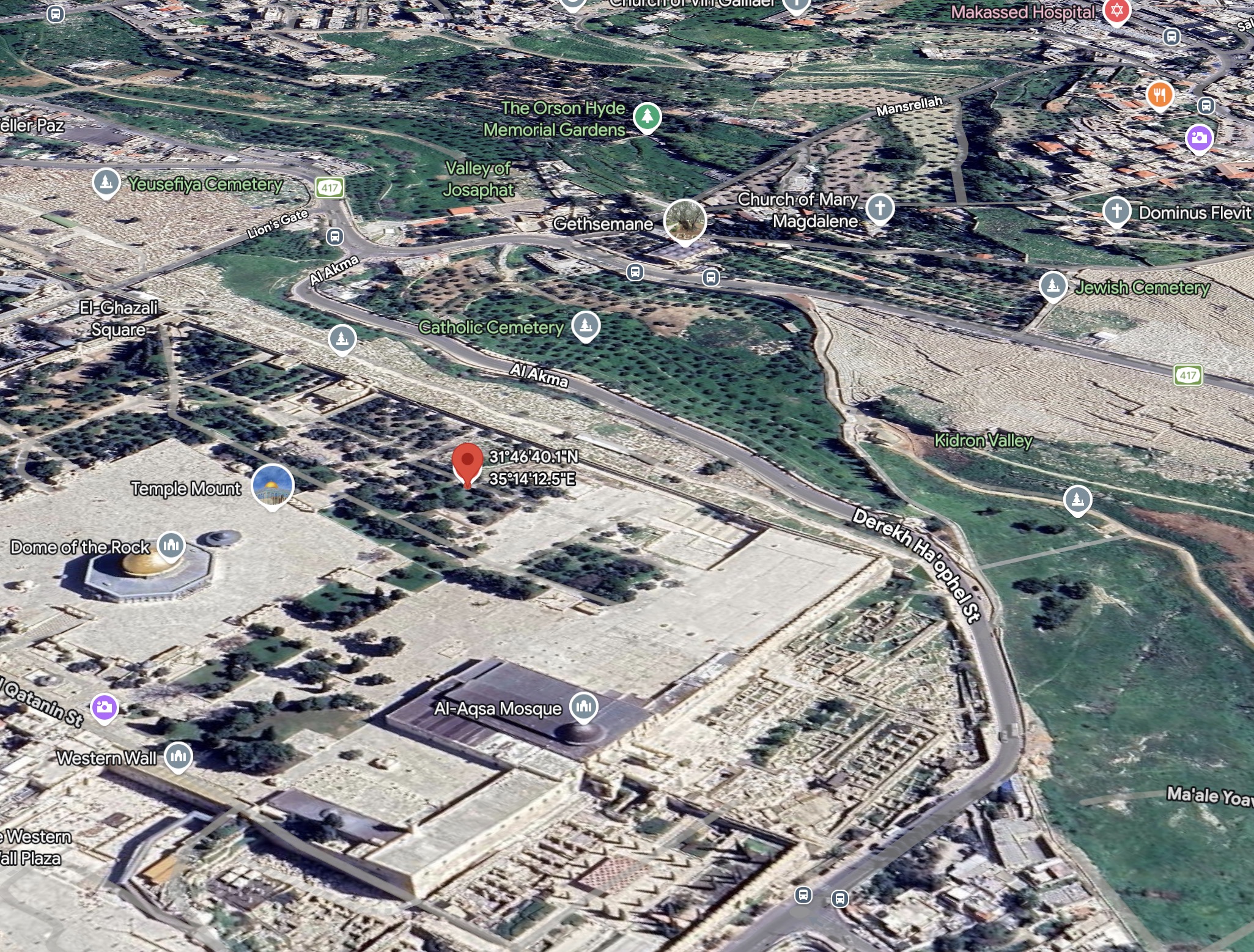
Bethany Beyond the Jordan — Traditional Setting Before the Journey to Lazarus
language insight
language
Scripture does not identify the language Thomas used when he spoke these words. Jesus and His disciples most likely used Aramaic commonly in ordinary conversation, while Hebrew and Greek were also present within the multilingual environment of first-century Jewish Palestine. Thomas may therefore have spoken this statement in Aramaic, but that cannot be established with certainty. John preserves Thomas’s words for us in Koine Greek. Because no contemporary Aramaic transcript of this conversation survives, the Greek text of John is the wording available to us for direct linguistic analysis.
original
Ἄγωμεν καὶ ἡμεῖς ἵνα ἀποθάνωμεν μετ’ αὐτοῦ
transliteration
Agōmen kai hēmeis hina apothanōmen met’ autou
meaning
Ἄγωμεν (agōmen) — let us go καὶ ἡμεῖς (kai hēmeis) — we also / let us also ἵνα ἀποθάνωμεν (hina apothanōmen) — so that we may die μετ’ αὐτοῦ (met’ autou) — with him
John introduces Thomas’s statement with an important detail. Thomas does not say these words privately to Jesus. He says them to his: συμμαθηταῖς (symmathētais) — fellow disciples. This Greek word is unusual. It occurs only here in the New Testament. Thomas is addressing the other disciples as a group and calling them to accompany Jesus. His first word is: Ἄγωμεν (agōmen) — “Let us go.” It comes from the verb ἄγω (agō), meaning to lead, bring, or go. Here it functions as a first-person plural exhortation. Thomas is not merely announcing: “I am going.”, He is urging: “Let us go.” Then comes: καὶ ἡμεῖς — “we also.” Thomas includes himself with the other disciples in the response he is calling for. The most sobering phrase follows: ἵνα ἀποθάνωμεν — “that we may die.” The verb comes from ἀποθνῄσκω (apothnēskō), the ordinary Greek verb meaning to die. Thomas believes that returning toward Judea with Jesus may result in death. Finally: μετ’ αὐτοῦ — “with him.” Within the immediate context, “him” most naturally refers to Jesus. The disciples have just reminded Jesus that opponents in Judea had recently attempted to stone Him, and Thomas is responding to Jesus’ determination to return there. Thomas is therefore not making an abstract theological statement about death. He is responding to a particular danger. There is another linguistic detail in John’s introduction: Θωμᾶς ὁ λεγόμενος Δίδυμος Thomas, who is called Didymus. Thomas represents a Semitic name associated with the meaning “twin.” Δίδυμος (Didymos) is the Greek word meaning “twin.” John therefore gives his readers both forms. Scripture never identifies Thomas’s twin, and later attempts to name that person go beyond the biblical evidence. The grammar also does not turn Thomas’s statement into a universal command for Christians to seek death or suffering. It records Thomas’s exhortation during a particular moment of danger. What the language clearly communicates is solidarity and willingness: Let us go with Him, even if going with Him means facing death. John’s larger narrative then adds the irony Thomas cannot yet see. Thomas speaks about dying with Jesus. Jesus is traveling toward Bethany to reveal Himself as the resurrection and the life.