Collection 01
THE STONES WILL CRY OUT
"But He answered and said to them, I tell you that if these should keep silent, the stones would immediately cry out.”
BIBLICAL INSIGHT
Jesus is approaching Jerusalem for the final time. As He descends the Mount of Olives, a multitude of His disciples begins praising God loudly for the mighty works they have seen. Their words are unmistakably royal: “Blessed is the King who comes in the name of the LORD!” This is the moment surrounding Luke 19:40. Some Pharisees in the crowd tell Jesus: “Teacher, rebuke Your disciples.” They are asking Him to silence what is being said about Him. Jesus refuses. “I tell you that if these should keep silent, the stones would immediately cry out.” The statement is stronger when we keep it inside that setting. Jesus is not simply teaching that nature is beautiful or that creation praises God in a general sense. Scripture certainly teaches that creation declares God’s glory, but Luke 19:40 is responding to something specific. Jesus is being publicly acclaimed as King. And He will not deny the truth contained in that recognition. Throughout His ministry, Jesus sometimes commanded silence concerning His identity or mighty works. Here, as He enters Jerusalem at the culmination of His journey, He does not silence the proclamation. The moment has changed. The King is approaching His city. His disciples are praising God for what they have seen. The Pharisees demand silence. Jesus says that if the human witnesses become silent, the stones themselves will cry out. At the most basic level, His point is unmistakable: Silencing the disciples cannot silence the truth of what God is doing. The language is deliberately vivid. Stones do not ordinarily speak. Jesus uses the impossible image to express the inevitability of witness. If those who have seen God’s works refuse or are forced to remain silent, creation itself would have to take their place. There may also be a deeper biblical resonance. Throughout the Old Testament, creation is sometimes pictured participating in praise before God. The heavens declare His glory. Mountains and hills break forth into singing. Trees clap their hands. There is also another biblical use of crying stones. Habakkuk describes a stone crying out from a wall as a witness against injustice. Scholars therefore differ over whether Luke’s stones primarily evoke praise, prophetic witness, judgment, or some combination of these ideas. Luke’s immediate context gives reason to hear more than celebration alone. Directly after Jesus speaks about the stones crying out, He sees Jerusalem and weeps. He then foretells a coming destruction in which Jerusalem’s enemies will not leave “one stone upon another,” because the city did not recognize the time of its visitation. That proximity should make us careful. The stones of Luke 19 are surrounded by both praise and warning. Some people recognize the King. Others do not. Jesus does not tell the Pharisees that every word shouted by the crowd represents complete theological understanding. In fact, the same Gospel will soon show how incomplete human expectations surrounding Jesus can be. But the central truth cannot be suppressed: The King has come. God is acting decisively through Him. And this moment demands recognition. That is why Luke 19:40 should not be reduced to a motivational command to “be loud about your faith.” There is an application for Christian witness, but the verse is first about Christ. The stones would cry out because of who is entering Jerusalem. Jesus is the center of the statement. The disciples’ praise matters because it is directed toward Him. The Pharisees’ demand matters because they are attempting to silence it. And Jesus’ answer matters because He refuses to treat the truth of His identity as something that can now be quietly suppressed. Only days remain before He will be rejected, crucified, and killed. The crowd sees a King entering Jerusalem. Jesus knows where the road is actually leading. Still, He accepts their proclamation. Luke 19:40 therefore carries both majesty and gravity. Creation itself is summoned into Jesus’ answer as though the physical world could testify if human voices refused. The question is not whether rocks possess some independent message. The message is Christ. The stones matter because Jesus says even they would bear witness before the significance of this moment could simply disappear into silence. The King has arrived. And the truth of who He is will not ultimately be silenced.
historical context
The Final Approach to Jerusalem
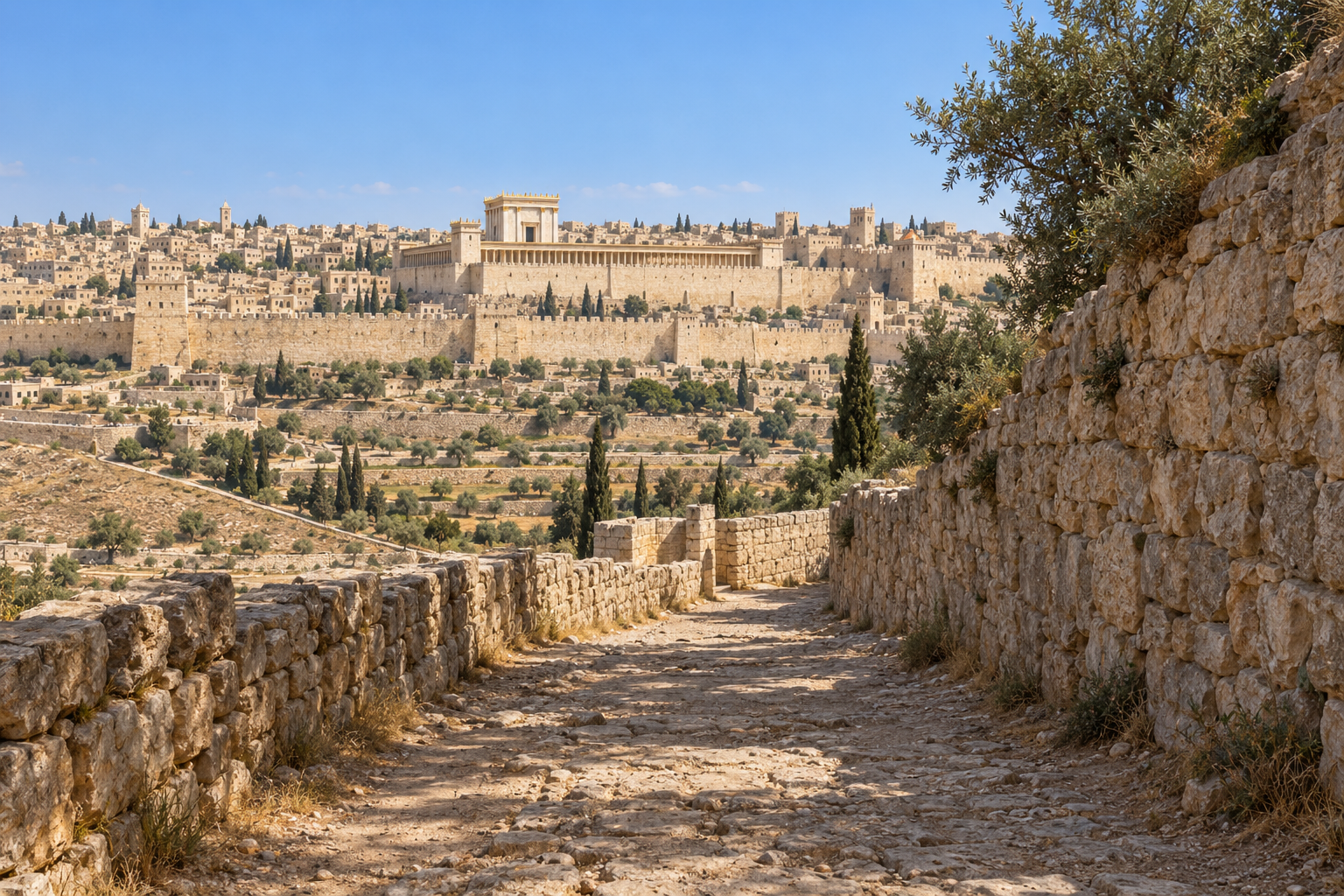
Luke 19:40 occurs near the end of a journey that began much earlier in the Gospel. In Luke 9:51, Jesus “steadfastly set His face to go to Jerusalem.” By Luke 19, He has reached the eastern approach to the city. Luke places Jesus near Bethphage and Bethany at the Mount of Olives. From this ridge east of Jerusalem, travelers approaching from the direction of Jericho could descend toward the Kidron Valley and then ascend toward the city. It was Passover season. Jerusalem would have been filling with Jewish pilgrims arriving to commemorate Israel’s deliverance from Egypt. Jesus joins that movement toward the city, but His entrance is deliberately distinctive. He sends two disciples to retrieve a colt that has never been ridden. They place their garments on it, Jesus sits upon it, and others spread clothing along the road. As He begins descending the Mount of Olives, Luke says “the whole multitude of the disciples” begins rejoicing and praising God with a loud voice for the mighty works they had seen. Their cry draws from Psalm 118, a psalm closely associated with pilgrimage and worship: “Blessed is the King who comes in the name of the LORD!” Luke’s wording is especially significant because he explicitly includes the title “King.” The scene also recalls Zechariah’s picture of Zion’s king coming humbly and riding on a donkey, although Luke does not explicitly quote Zechariah here as Matthew and John do. Against the realities of Roman rule, royal language was not politically neutral. Jerusalem during a major pilgrimage festival was a place where religious expectation, national memory, and Roman authority existed in close proximity. Publicly acclaiming someone as king could therefore carry implications far beyond enthusiastic celebration. Some Pharisees respond by telling Jesus to rebuke His disciples. Luke does not explicitly tell us their motive, so we should not claim certainty about whether they objected theologically, feared the consequences of the public proclamation, or both. What Luke does tell us is that they wanted the acclamation stopped. Jesus would not stop it. “If these should keep silent, the stones would immediately cry out.” The physical setting makes the image striking. The Mount of Olives and the approaches to Jerusalem were marked by stone: rocky terrain, stone buildings, walls, roads, tombs, and the monumental stonework of Jerusalem visible across the valley. Then, immediately after speaking of stones crying out, Jesus looks upon Jerusalem and weeps. He foretells a day when enemies will surround the city and “will not leave in you one stone upon another.” Historically, Jerusalem would indeed be devastated by Roman forces in AD 70, several decades after Jesus’ death. Luke 19 therefore places Jesus’ saying at an extraordinary intersection. The disciples are praising. The Pharisees are objecting. Jerusalem lies ahead. The crucifixion is near. And Jesus speaks of stones that will not remain silent moments before He speaks of stones that will one day be torn down. The scene is both royal celebration and solemn warning. Jesus has reached Jerusalem. The final days of His earthly ministry have begun.
Estimated Date
c. AD 30 or AD 33
Luke places this event during Jesus’ final approach to Jerusalem immediately before His crucifixion and during the Passover period. The two principal historical chronologies for Jesus’ crucifixion place that final Passover in either AD 30 or AD 33. The safest description is: the final week of Jesus’ earthly ministry, shortly before His crucifixion, within either an AD 30 or AD 33 Passion chronology. Scripture does not provide the exact calendar date of Luke 19:40.
Key Insight
They Recognized the King, but Misunderstood the Kingdom
The disciples were right about something enormous: Jesus is King. Luke records them shouting, “Blessed is the King who comes in the name of the LORD!” When the Pharisees demand that Jesus silence them, He refuses. Their proclamation about Him is not something He corrects. But Luke has already told us that the people surrounding Jesus expected something they did not fully understand. Just before the triumphal entry, Luke explains that Jesus told the parable of the minas because He was near Jerusalem and “they thought the kingdom of God would appear immediately.” They recognized the King, but their expectations of His kingdom were incomplete. John’s Gospel makes this even clearer. Looking back on the same entrance into Jerusalem, John says that even Jesus’ disciples “did not understand these things at first.” Only after Jesus was glorified did they understand what had been written about Him and what had taken place. That makes Luke 19:40 especially powerful. Jesus does not reject the truth simply because those proclaiming it do not yet understand its full meaning. He really is the King. But He is not riding into Jerusalem to seize political power or overthrow Rome. He is riding toward rejection, suffering, crucifixion, and resurrection. The title is right. Their understanding of how the King will reign is not yet complete. This helps explain the tension of the entire scene. The disciples rejoice while Jesus, only moments later, weeps over Jerusalem. The crowd sees arrival and victory. Jesus knows the road ahead leads first to the cross. So when He says the stones would cry out, He is not validating every expectation surrounding the celebration. He is affirming the truth at its center: The King has come. Human misunderstanding does not make that confession false. And human opposition cannot make His kingship disappear.
Location
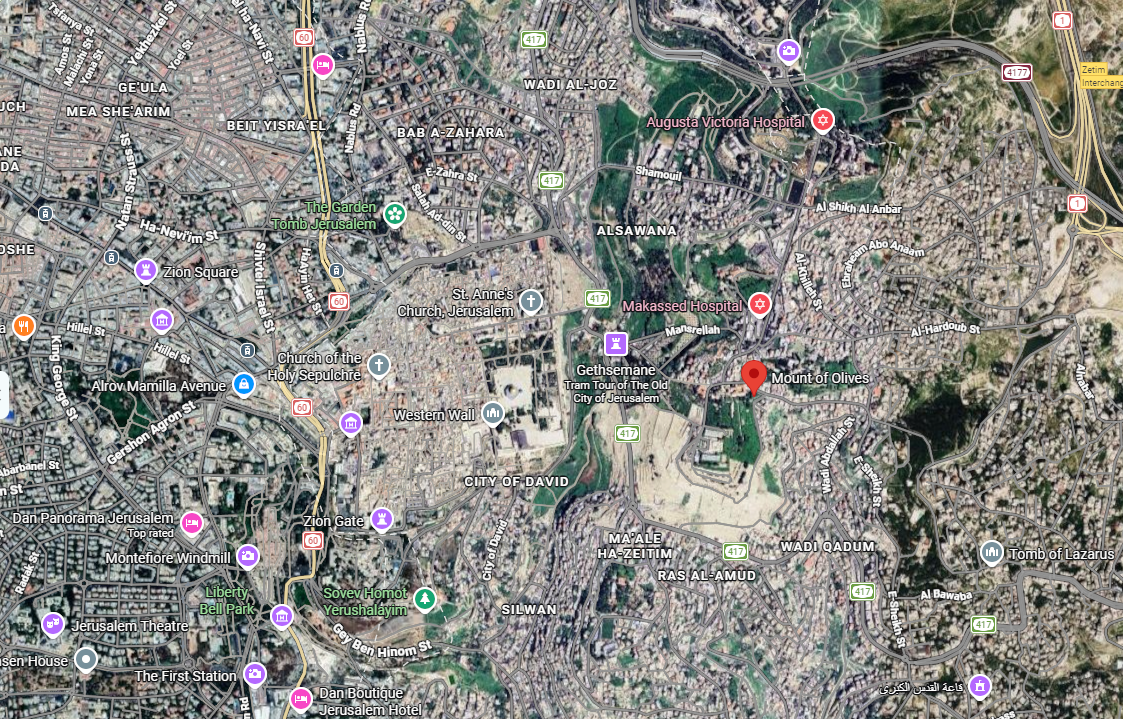
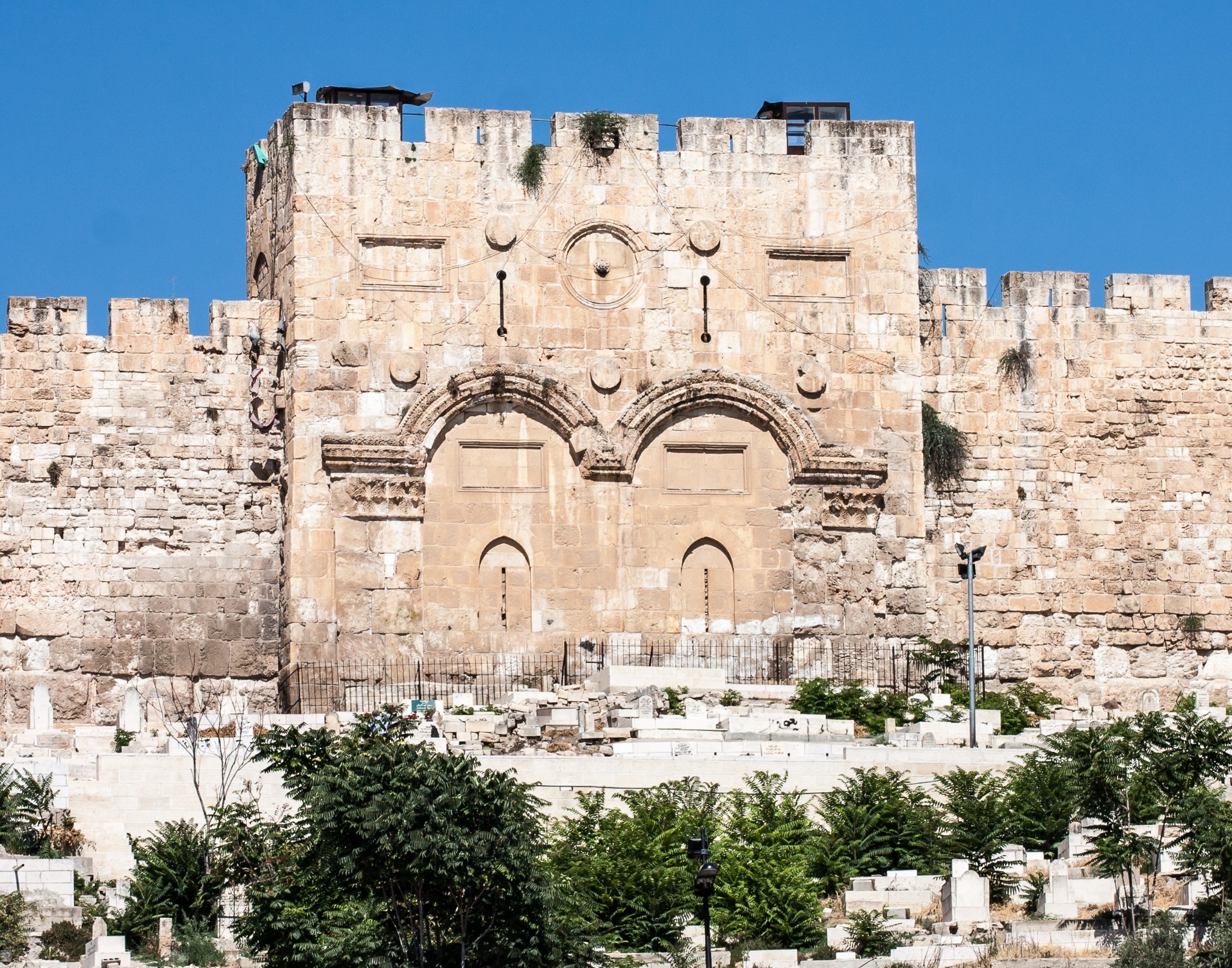
Mount of Olives — Eastern Approach to Jerusalem
language insight
language
Koine Greek
original
σιωπήσωσιν · λίθοι · κεκράξονται
transliteration
siōpēsōsin · lithoi · kekraxontai
meaning
Keep silent · stones · cry out or shout aloud
Luke builds Jesus’ response around a sharp contrast: silence versus proclamation. σιωπήσωσιν (siōpēsōsin), from σιωπάω, means to become silent or keep quiet. The Pharisees have just told Jesus to rebuke His disciples, so Jesus answers their demand directly: if these voices are silenced... λίθοι (lithoi) is the ordinary Greek word for “stones.” κεκράξονται (kekraxontai), from κράζω, means to cry out, shout, or call loudly. The word describes an audible, emphatic cry, not quiet speech. The NKJV follows the traditional Greek text here, which reads κεκράξονται. Many modern critical Greek editions instead read κράξουσιν (kraxousin), also meaning “will cry out.” The textual difference does not materially change Jesus’ statement. The NKJV’s “immediately” should also not be treated as though Luke used a separate Greek word meaning “immediately.” The force of the sentence is the contrast itself: if the disciples are silenced, the stones will cry out. Jesus’ language makes the point difficult to miss: Silence these witnesses, and creation itself would become the witness.