Collection 01
YOU ARE MUCH MORE VALUABLE
Look at the birds of the air, for they neither sow nor reap nor gather into barns; yet your heavenly Father feeds them. Are you not of more value than they?
BIBLICAL INSIGHT
Jesus tells His hearers to look at something ordinary: “Look at the birds of the air.” The command is simple, but the lesson is not. Jesus takes something His hearers could see every day and uses it to teach them about the care of their heavenly Father. The birds “neither sow nor reap nor gather into barns.” Jesus is describing the ordinary agricultural process of His world. People planted seed, harvested crops, and stored what they gathered for the future. Birds did none of those things. They had no fields to sow, no harvest to reap, and no barns in which to secure tomorrow. Yet Jesus says: “Your heavenly Father feeds them.” He is not suggesting that birds are inactive. They search for food, build nests, and care for their young. Jesus is not condemning work, preparation, or responsible stewardship. His point is that the birds remain dependent upon a world they did not create and cannot control. They search for food, but they did not create the earth from which that food comes. They did not command the rain, create the seed, establish the seasons, or design the living world that sustains them. Behind the ordinary processes of creation stands the providence of God. Scripture speaks this way elsewhere. God asks Job who provides food for the raven when its young cry out, and the Psalms describe God as the One who gives food to the creatures He has made. Creation is active, but it is dependent upon its Creator. Jesus then makes the lesson personal. He does not simply say that God feeds the birds. He says: “Your heavenly Father feeds them.” That wording matters. The One sustaining creation is not presented merely as the Creator of the universe. Jesus speaks of Him as Father. Then He asks the question at the heart of the verse: “Are you not of more value than they?” His reasoning moves from the lesser to the greater. The birds genuinely matter to God, but Jesus tells His hearers that they are of greater value. The wider testimony of Scripture helps explain why humanity holds a unique place within creation. Genesis tells us that human beings were made in the image of God. Human worth is therefore not something earned through productivity, wealth, status, accomplishment, or usefulness. Matthew 6:26 does not explicitly make that argument, but Jesus plainly states the conclusion: You are of more value. That is what gives the illustration its weight. The bird has no wealth stored away and no ability to guarantee what tomorrow will bring. It lives entirely dependent upon a creation beyond its control. Yet it is not beneath the Father’s attention. Jesus tells His hearers to look at that reality and consider what it reveals about their Father. If He cares for the birds, why would those whom Jesus says are of greater value imagine that He has forgotten them? This does not mean Jesus is promising a life without hardship. His words are not a guarantee that those who trust God will never experience need, suffering, uncertainty, or loss. God’s care does not mean difficulty cannot come. The assurance of Matthew 6:26 is not that we will control what happens tomorrow. It is that our Father remains sovereign over what we cannot control. Jesus is addressing people tempted to place their security in what they can accumulate, preserve, or manage. He points toward creatures that possess none of those securities and reminds His hearers that they still live beneath the care of God. The bird does not sustain the world that sustains it. Neither do we. We can work faithfully, plan wisely, and steward what has been placed in our hands. But beneath all of that remains a truth we cannot escape: we are creatures dependent upon our Creator. Jesus does not present that dependence as something frightening. He reminds us who the Creator is: “Your heavenly Father.” That is where the comfort of the verse is found. Not in our ability to guarantee tomorrow or remove every uncertainty, but in the character of the One upon whom we depend. Then Jesus leaves His hearers with the question again: “Are you not of more value than they?” The answer is yes. Our value is not determined by how much we possess, how productive we are, or how successfully we secure our future. Jesus points toward the birds and reminds us that even the ordinary creatures of His Father’s creation live beneath His providential care. Then He tells us something greater. You are of more value. The birds are not ultimately the point. The Father is. Jesus points through creation toward the One who sustains it. Every bird crossing the sky becomes a reminder that creation is not forgotten by its Creator. And neither are you. “Are you not of more value than they?” Matthew 6:26 calls us to look at what God sustains and remember who He is: our heavenly Father, the One upon whom His creation depends, and the One Christ tells us we can trust.
historical context
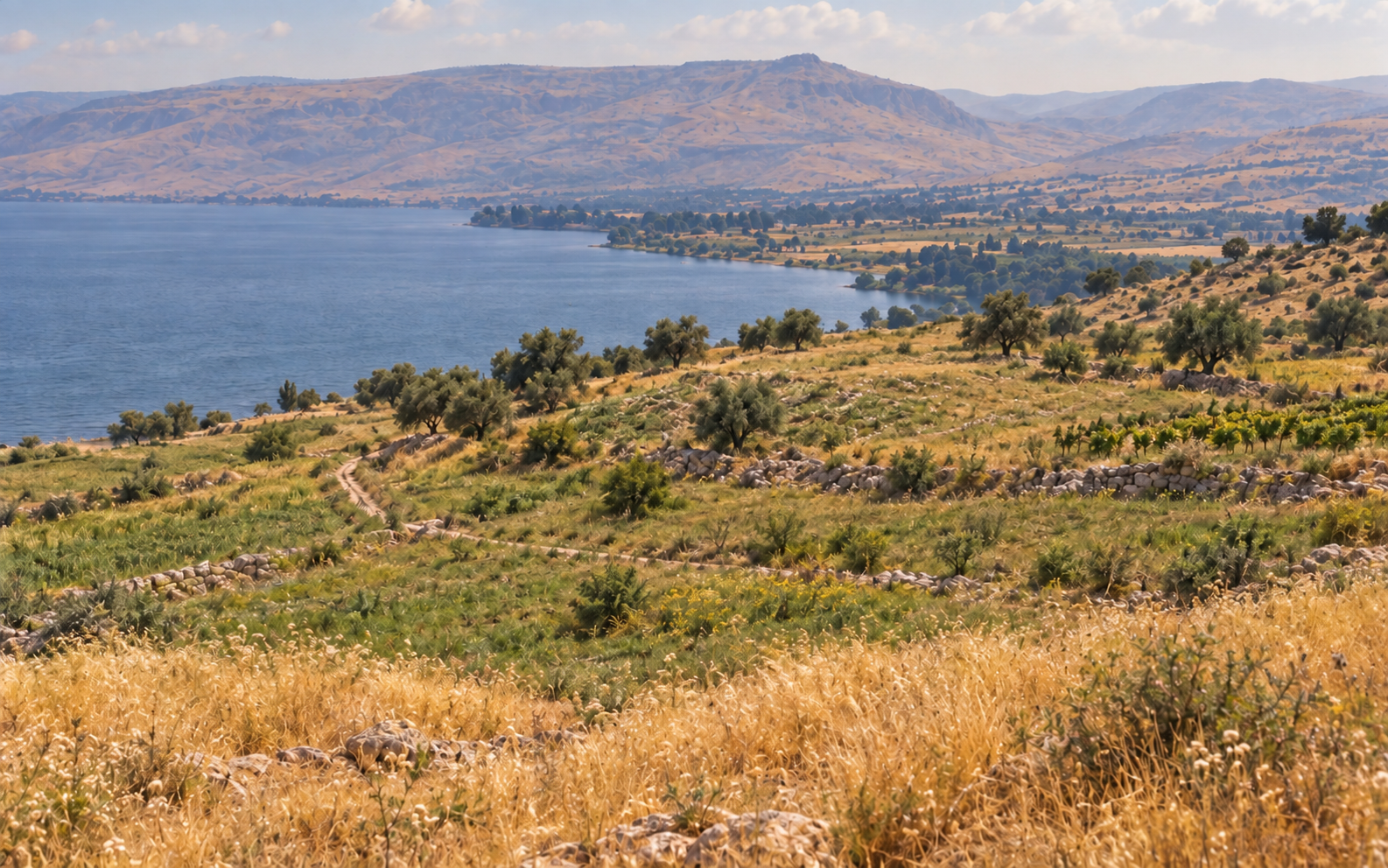
Matthew places these words within the Sermon on the Mount, during Jesus’ ministry in Galilee. Just before introducing the sermon, Matthew describes Jesus traveling throughout the region, teaching in synagogues, proclaiming the kingdom of God, and healing the sick. Crowds came to Him from Galilee, the Decapolis, Jerusalem, Judea, and beyond the Jordan. When Jesus saw them, Matthew says He went up on a mountain, sat down, and began to teach. Matthew does not identify the mountain. Later Christian tradition associated the Beatitudes with the hills near Tabgha and Capernaum on the northwestern side of the Sea of Galilee. That tradition is ancient, but it cannot establish the precise location where Matthew 6:26 was spoken. What Matthew does establish is the setting: Jesus is teaching in Galilee, in a region where His imagery would have been immediately familiar. First-century Galilee was deeply connected to agriculture. Villages, fields, vineyards, orchards, livestock, fishing, and seasonal harvests shaped ordinary life. Jesus’ teaching repeatedly reflects that world. Seeds are sown. Crops are harvested. Workers enter vineyards. Shepherds tend flocks. Fishermen cast nets. For many hearing Him, agriculture was not background scenery. It was life. Grain was a basic part of the diet, and the sequence Jesus describes would have required no explanation. Seed was sown. Crops had to survive until harvest. Grain was cut, processed, and stored for what came next. So when Jesus says that the birds “neither sow nor reap nor gather into barns,” He is naming a process His listeners knew intimately. Sowing meant investing in a future harvest. Reaping meant gathering what months of labor, weather, soil, and circumstance had produced. Storing grain helped carry a household beyond the harvest and into the months ahead. A barn or storehouse therefore represented more than wealth. It represented provision for the future. That matters because people in Galilee lived much closer to food production than most modern readers do. A failed crop, damaged harvest, debt, taxation, rent, or other economic pressure could directly affect a household’s ability to eat. Not everyone hearing Jesus should be imagined as destitute, and scholars continue to debate the exact economic conditions of first-century Galilee. But the pressures behind His words were real. Land, harvest, debt, taxation, and daily provision were part of the world in which He taught. Into that world Jesus said: “Look at the birds of the air.” Matthew does not identify the species. The Greek expression is general: the birds of the air or sky. But birds would have been an ordinary part of the agricultural landscape. People living around fields and villages would have seen them feeding, nesting, and moving through cultivated land. Grain-eating birds could even compete with farmers for part of the crop. That makes Jesus’ choice especially vivid. His hearers knew what sowing required because they sowed. They knew what harvest required because they harvested. They knew why grain was stored because stored grain mattered. And they knew birds did none of those things in the human agricultural sense. Yet the birds were there. They were feeding. They were living within a creation continuing to sustain them. Jesus takes something completely ordinary and tells His hearers to look again. There is also a deeply biblical background to this. Israel’s Scriptures repeatedly direct attention toward creation to reveal something about God. Job speaks of God providing food for the raven, and the Psalms describe living creatures looking to Him for their food. Jesus is not introducing an unfamiliar idea of God as the sustainer of creation. He is bringing that truth into the immediate experience of the people standing before Him. But then He makes it personal: “Your heavenly Father feeds them.” Earlier in the same sermon, Jesus taught His disciples to pray, “Our Father in heaven.” Now He places the ordinary activity of birds inside that relationship. For a Galilean listener surrounded by planting, harvesting, storing, taxation, uncertain weather, and responsibilities that could not simply be ignored, Jesus’ words were not sentimental observations about nature. The farmer still had to sow. The worker still had to reap. The household still had to prepare. But none of them controlled the rain, the soil, the seasons, or ultimately the life upon which every harvest depended. And above the same fields where people worked and worried, the birds continued to fly. That is the historical world behind Matthew 6:26. Jesus was speaking to people who understood exactly why human beings sowed, reaped, and stored. Then He pointed toward creatures that did none of those things and said that His Father still sustained them. Only then did He ask: “Are you not of more value than they?”
Estimated Date
c. AD 29–30
Matthew does not give a precise calendar date for Matthew 6:26, but he clearly places it within the Sermon on the Mount during Jesus’ ministry in Galilee. The safest estimate is c. AD 29–30, based on the broader Gospel chronology. Scripture does not provide the exact day, month, or year.
Key Insight
Why “Your Heavenly Father” Matters
Jesus could have said simply, “God feeds them.” He does not. He says, “your heavenly Father feeds them.” That distinction is central to Matthew 6:26. Jesus is not merely teaching that God possesses sovereign power over creation. He is reminding His hearers that the God who sustains creation is the One they are being taught to know as Father. Earlier in the Sermon on the Mount, Jesus repeatedly speaks of “your Father who is in heaven,” and He teaches His disciples to pray, “Our Father in heaven.” By the time He points toward the birds, that relationship has already become part of the sermon’s language. The argument therefore carries more weight than simply saying that God provides for animals. Jesus begins with something His hearers can observe: the birds are sustained within God’s creation. He then moves from what they can see to what they must trust. If the Father attends to creatures of lesser value, His children should not interpret uncertainty as evidence that He has forgotten them. This is an argument from the lesser to the greater. The birds matter to God, but Jesus explicitly says His hearers are “of more value than they.” The comfort of the verse is therefore rooted not in human self-sufficiency, nor in a promise that hardship will never come, but in the character of God and the relationship Jesus places before His disciples. He is Creator. He is Sustainer. And Jesus says He is your heavenly Father. Matthew 6:26 asks the reader to see both creation and anxiety differently. The birds become evidence of God’s continuing providence, and the Fatherhood of God becomes the reason His people can trust Him even when they cannot control what comes next.
Location
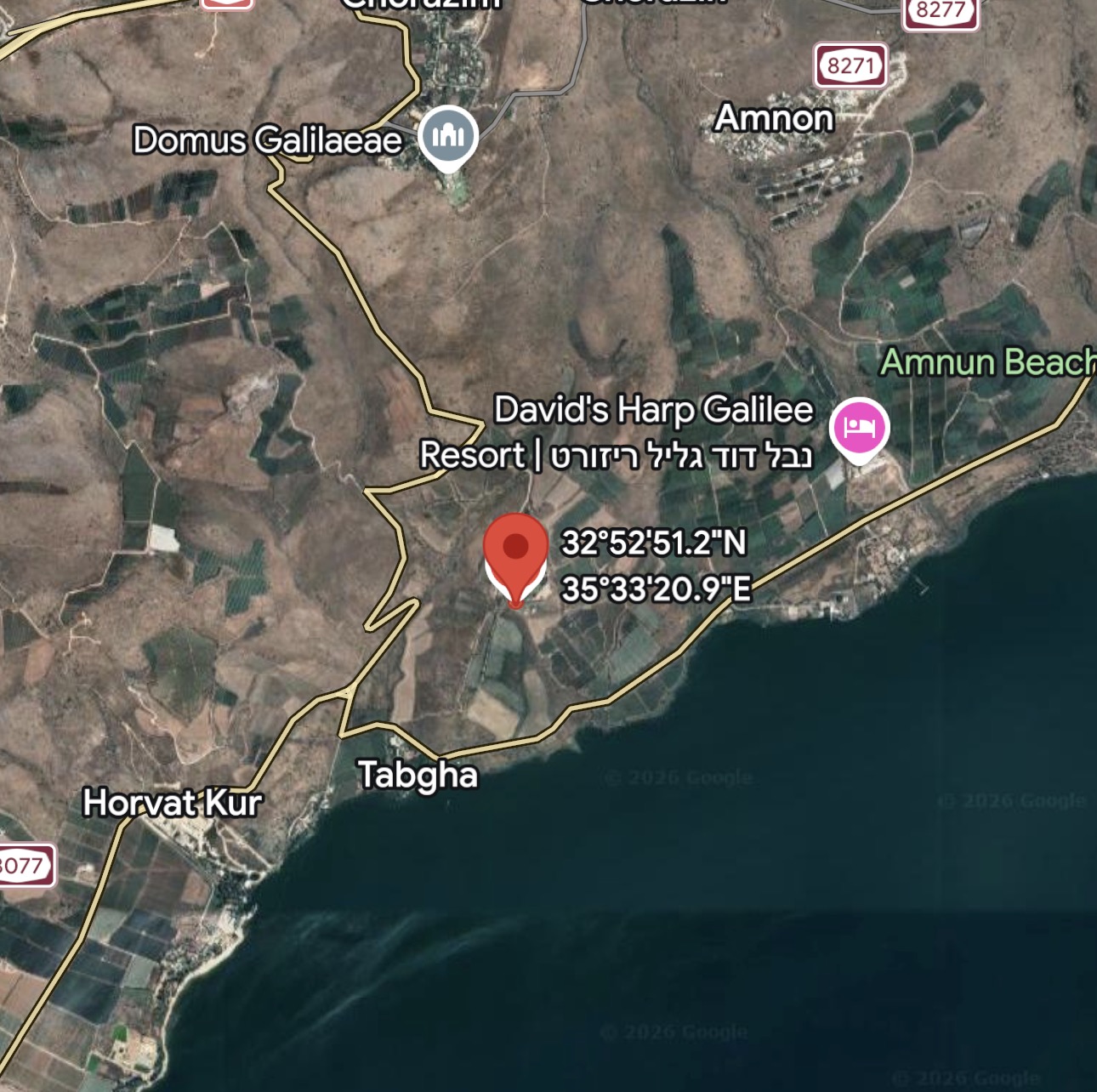
Mount of Beatitudes, Galilee — Traditional Location of the Sermon on the Mount
language insight
language
Koine Greek
original
ἐμβλέψατε · διαφέρετε
transliteration
emblepsate · diapherete
meaning
Look at, observe carefully · be of greater value, surpass
Matthew preserves Jesus’ teaching in Koine Greek. Two words help sharpen Matthew 6:26. ἐμβλέψατε (emblepsate), translated “look at,” is an imperative from ἐμβλέπω. Jesus is directing His hearers to turn their attention toward the birds and consider what they are seeing. The birds are not incidental scenery; Jesus intentionally makes them the visible evidence within His illustration. Later He asks, “Are you not of more value than they?” The verb διαφέρετε (diapherete), from διαφέρω, can carry the sense of differing, surpassing, or being of greater worth. In this context, the comparison is explicit: God cares for the birds, yet Jesus tells His hearers that they are of greater value. The Greek therefore reinforces the movement of the verse: observe what the Father does in creation, then understand the greater truth Jesus draws from it.